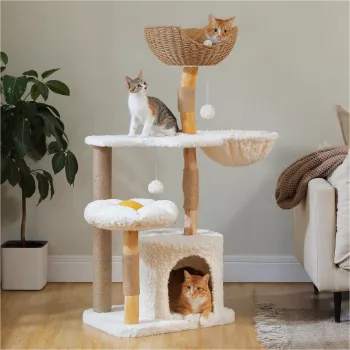
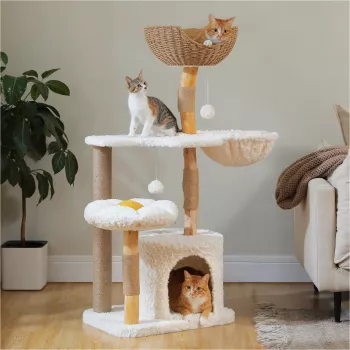
A well-designed cat tree can double as a daily enrichment zone and a piece of furniture that fits a modern home. This style combines elevated lounging, a private hideaway, and a hammock-like perch—useful for larger indoor cats that want options throughout the day. When a cat can climb, scratch, perch, and decompress in one reliable spot, the whole home tends to feel calmer and more organized.
Basic towers usually offer one primary “hangout” platform and one scratching post. A more thoughtful design supports how cats actually rotate between activities and moods.
If you’re shopping for a cohesive, furniture-like option, see the Modern Wood Cat Tree with Flower Bed, Condo & Hammock for Large Indoor Cats.
Cats don’t just want height—they want choices. The most-used cat trees typically provide both visibility and security, with at least one spot that feels tucked away.
| Area | Best for | What to look for during setup | Tip for larger cats |
|---|---|---|---|
| Flower bed perch | Sunbathing, supervising, quick naps | Stable top platform and snug cushion fit | Place so the jump up is straightforward and not obstructed |
| Condo hideaway | Privacy, anxious cats, quiet naps | Smooth entry access and firm base support | Keep entry clear; avoid wedging the condo against furniture |
| Hammock | Deep sleep, cozy lounging | Taut, secure attachment points | Position so the approach is stable and not a long leap |
For big cats, stability tends to matter more than height. A tree can look sturdy, but if it shifts when a heavier cat jumps, many cats will avoid it—or use it only when they’re feeling bold.
For cats who need a bit more environmental structure—clear pathways, fewer cramped corners, and better flow—pairing the setup with a home layout guide like Mastering Furniture Arrangement for Calm and Clarity can make pet zones feel intentional rather than cluttered.
Scratching is normal, healthy behavior. Cats scratch to maintain claws, stretch shoulders and back, and leave scent markers. The most effective way to protect furniture is to provide a better scratching option in a better location.
Guidance on meeting core feline environmental needs and enrichment is also supported by veterinary and welfare organizations like the American Association of Feline Practitioners (AAFP) and International Cat Care.
The “perfect” placement is where your cat already wants to be, with a view, a sense of safety, and low startle risk.
For a calm, coordinated setup, consider pairing your cat’s “vertical territory” with a wellness-focused routine resource like Calm With Smart Tools — AI-Enhanced Stress Relief Ebook for Home Wellness to support a quieter, more consistent home environment.
Yes. Enclosed spaces can reduce stress by offering a sheltered retreat; place it in a quieter area and avoid forcing the cat inside—use treats or toys to invite exploration.
Put it near where the cat already spends time (like a window or living room corner) and close to existing scratching spots. Stable flooring and a low-traffic placement help the tree feel safe.
Offer an appealing scratching surface in the same area the cat targets, reward use, and add a complementary scratcher if your cat prefers a different scratching angle (vertical vs. horizontal).





Leave a comment