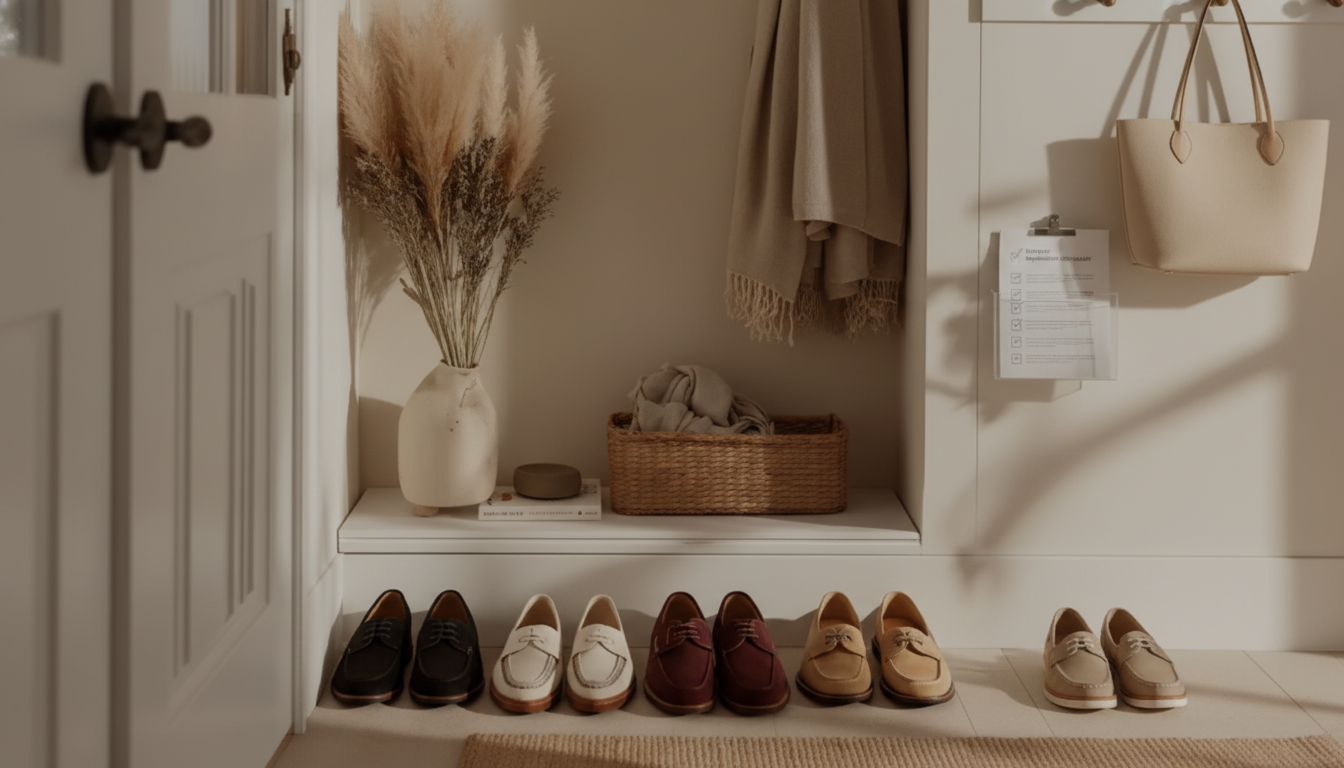
A functional “mudroom” can exist even when there’s no dedicated room—just a few square feet near the door. The difference between “always messy” and “surprisingly calm” usually comes down to two things: designing around your real traffic flow and giving everyday items a clear home. Below is a practical plan to map what happens when everyone walks in, build a compact setup using vertical and hidden storage, and lock it in with a simple reset routine.
Before buying hooks or bins, watch what happens for a day or two. Most clutter isn’t random—it follows a predictable landing path.
| Zone | Purpose | Best Small-Space Solutions | Common Mistake to Avoid |
|---|---|---|---|
| Landing | Stop clutter at the door | Wall-mounted shelf, narrow console, tray/bowl, labeled mail sorter | Using a large table that blocks the walkway |
| Hanging | Keep coats and bags off chairs | Over-the-door hooks, wall hooks in a row, slim rack, tension rod in closet | Too few hooks for real-life volume |
| Footwear | Reduce dirt and shoe piles | Vertical shoe rack, slim shoe cabinet, boot tray, under-bench cubbies | Storing muddy shoes without a washable mat |
| Extras | Handle pets and seasonal gear | Lidded bins, high shelf, basket for scarves/gloves, leash hook | Letting seasonal items take over prime space |
Small entryways fail when the “mudroom” expands into the whole home. A boundary makes the system self-correcting.
The most reliable mini-mudroom setups all include three anchors: a place to hang, a place for shoes, and a place to empty pockets.
If you want a structured way to plan measurements, zones, and installation steps before spending money, use the Small Space Mudroom Magic printable checklist (digital download) to map the setup and avoid overbuying.
For more help with keeping pathways open (especially in open-plan homes where entry clutter spreads fast), Mastering Furniture Arrangement for Calm and Clarity pairs well with a small-space mudroom plan by focusing on flow, balance, and functional clearances.
For routine cleaning basics that support a healthier home (especially high-touch areas like doorknobs and light switches), follow guidance from the CDC. If you’re making upgrades with resale value in mind, it can also help to look at home improvement and remodeling insights from the National Association of Realtors.
A workable mudroom zone can start with a narrow strip of wall (about 24–36 inches wide) or even the inside of an entry closet. Prioritize vertical hooks, a small landing spot for keys/mail, and a mat or boot tray to contain dirt and shoes.
Over-the-door hooks or racks, tension rods in closets, freestanding slim shoe racks, lidded bins, and adhesive hooks (matched to the item’s weight rating) are reliable options. Add a washable runner or boot tray to protect floors, and use removable wall protectors if bags tend to scuff paint.
Use a daily 5-minute reset, sort mail immediately, and keep a single outgoing bin for items that must leave tomorrow. Limiting the entry to everyday essentials—plus labels and assigned hooks per person—prevents the “temporary pile” from becoming permanent.






Leave a comment