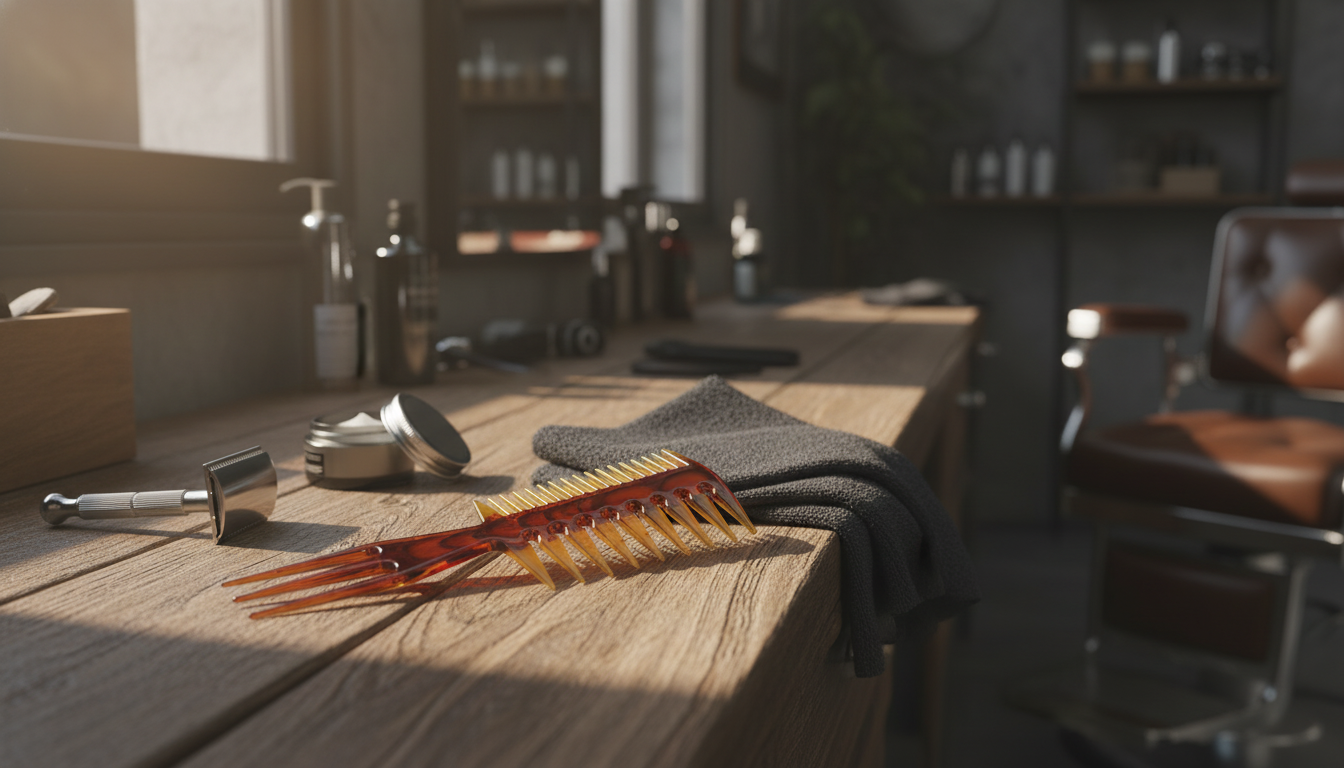
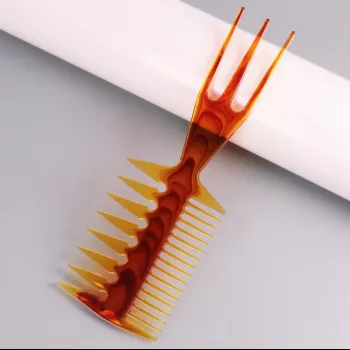
A trident-style men’s comb is built for controlled parting, clean edges, and quick touch-ups—especially when a standard wide comb feels too bulky for detail work. The multi-prong design helps guide small sections without overworking the rest of the style, which can be the difference between “close enough” and sharply finished. Below is a practical look at what makes a multi-functional trident comb useful, how to use it for crisper lines, and how to keep it gliding smoothly over time.
What a trident comb does differently
Unlike a typical comb that’s meant for broad passes, a trident comb uses a multi-prong layout to separate, guide, and place smaller sections of hair with more control. That layout is especially helpful when working close to the scalp, where tiny movements create the cleanest results.
- Uses multiple prongs to section and direct hair with more precision than a single-tooth pick or standard comb.
- Helps create cleaner parts, neater hairlines, and more consistent direction for short-to-medium men’s cuts.
- Ideal for quick adjustments during the day—especially for side parts, textured tops, and edge detailing.
- Often works as a compact grooming tool for travel kits, gym bags, and desk drawers.
Standout benefits for precision hairstyling
Precision tools shine when the goal is control without disruption. A trident comb is designed to refine the style you already set, rather than undoing it with heavy comb-throughs.
- Cleaner parting: Guide a straight or slightly curved part without pulling surrounding hair out of place.
- Edge control: Nudge small sections into place around the temples, hairline, and crown.
- Volume shaping: Lift and set direction at the roots in targeted areas instead of disturbing the whole top.
- Product distribution: Spread a small amount of pomade, cream, or wax through surface layers without weighing down the cut.
- Fast touch-ups: Fix “helmet hair” or hat marks by redirecting only the flattened sections.
When hair is fragile or prone to snapping, gentle handling matters. For general hair and scalp best practices, the American Academy of Dermatology shares straightforward guidance on daily care and avoiding unnecessary damage: American Academy of Dermatology Association — Hair care tips. If breakage is a concern, Cleveland Clinic also outlines common causes and prevention habits: Cleveland Clinic — Hair breakage: causes and prevention.
How to use it for sharper results (quick techniques)
Small, deliberate movements deliver the best results. Think “place and guide” rather than “drag and rake,” especially around edges and parts.
- For a crisp side part: Start at the natural part line, place the prongs at the scalp, and draw one steady line back; then comb each side away from the part.
- For a textured top: Lightly lift small sections at the roots, set direction with fingers, and finish by tapping the surface layers into place.
- For a clean hairline: Use short, controlled strokes at the front edge; avoid pulling through longer sections that can shift the overall shape.
- For cowlick control: Work with the growth pattern—lift at the root, use a tiny amount of product, then press hair into the intended direction.
- For a quick reset: Lightly mist with water (or dampen hands), then reshape only the problem area instead of recombing the whole head.
Best hairstyles and grooming scenarios
A trident comb fits into everyday grooming because it’s designed for detail work—exactly where many styles look messy first.
- Side part and business styles: Maintains a defined part line and tidy edges.
- Short fades and tapers: Keeps the top blended neatly and directs hair away from the fade line.
- Wavy/curly short styles: Separates curls in small sections to reduce frizz from over-combing.
- Beard and mustache detailing: Aligns small areas before trimming and helps shape with balm (use gentle strokes to avoid snagging).
- Pre-event touch-ups: Keeps lines neat for photos, meetings, weddings, or date nights.
At-a-glance guide: functions and when to use them
Targeted strokes are the sweet spot. Save full comb-throughs for right after showering or when doing a full reset.
Trident comb uses by goal
| Styling goal |
Technique |
Best time to use |
| Define a part |
Place prongs at scalp and draw a single clean line |
After towel-dry or on lightly damp hair |
| Tidy hairline |
Short strokes at the edge; avoid pulling longer sections |
After product application or final finish |
| Add control to textured top |
Lift small sections at roots; set with fingers |
During styling and midday touch-ups |
| Distribute product lightly |
Comb surface layers only to avoid buildup |
Right after applying pomade/cream |
| Fix hat marks |
Dampen slightly; redirect flattened areas |
On the go |
- If hair is fine or prone to breakage, reduce pressure and avoid combing when hair is soaking wet and most fragile.
- For thick hair, work in smaller sections to prevent snagging and maintain consistent direction.
Care, cleaning, and longevity tips
Shop tools that support a cleaner finish
FAQ
Is a trident comb good for short hair and fades?
Yes—short, controlled strokes help guide the top and keep hairlines tidy without disturbing the fade. Work in small sections and avoid dragging across the whole head.
Can it be used with pomade or styling cream?
Yes—apply a small amount of product first, then use light passes to distribute and refine the surface. Avoid heavy comb-throughs that can create buildup.
How often should a grooming comb be cleaned?
Remove hair after each use and wash regularly with mild soap and warm water, especially if product is used daily or the comb is stored in a bag.
Recommended for you




Leave a comment