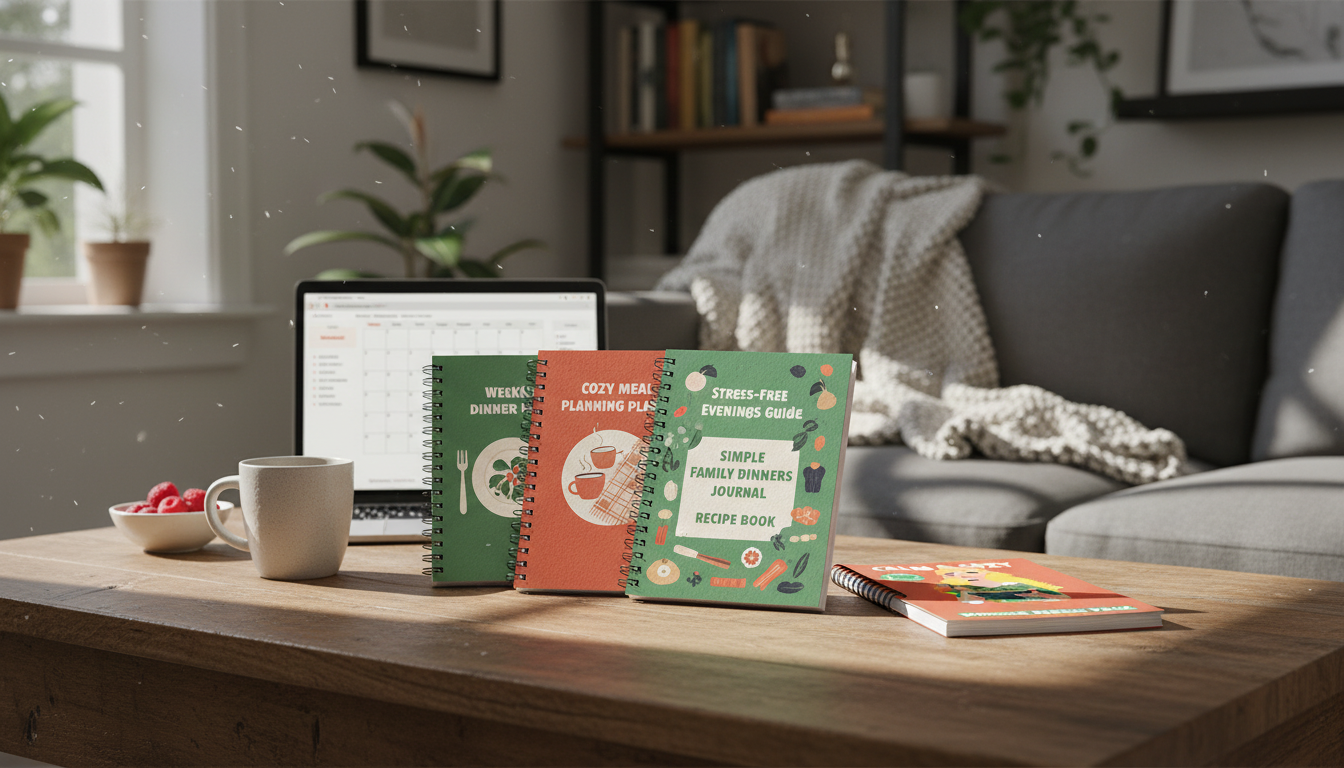
Your Calm & Cozy Dinner Week Pack – 4-in-1 Digital Bundle for Stress-Free Evenings
A calm dinner routine starts long before the stove turns on. When the end of the day hits, decision fatigue can make even simple meals feel heavy. The Your Calm & Cozy Dinner Week Pack – 4-in-1 Digital Bundle is designed to give dinner a steady weekly flow—so meals feel cozy, doable, and flexible even when schedules get messy.
What the Calm & Cozy Dinner Week Pack is designed to solve
- Cuts the nightly “what’s for dinner?” spiral with a repeatable weekly structure
- Makes meals feel cozy and predictable without becoming boring or rigid
- Helps balance comfort foods with everyday nutrition using simple swaps
- Supports family dinners by keeping prep realistic for weeknights
- Keeps planning in one place so shopping, cooking, and leftovers feel intentional
Instead of starting from scratch every evening, the pack nudges you toward a small set of decisions you can repeat: a couple familiar anchors, a couple low-effort nights, and a built-in buffer for leftovers. That structure is what makes “calm” feel possible—not perfection.
What’s included in the 4-in-1 digital bundle
- Weekly dinner plan pages to map dinners, leftovers, and one “backup” easy night
- Cozy meal-planning prompts that guide choices by energy level (low, medium, higher-effort)
- A streamlined grocery list format that groups staples and week-specific items
- Quick-reference pages for rotation ideas (mix-and-match proteins, sides, and comfort add-ons)
- A flexible format meant for tablets, laptops, or printing a week at a time
If the mental clutter around planning is the real hurdle, pairing your meal routine with a short decompression habit can help. The Calm With Smart Tools guide is a supportive add-on for easing stress so planning doesn’t feel like one more task on an overloaded brain.
A gentle weekly rhythm that keeps dinner calm
The goal isn’t a perfect plan—it’s a rhythm that absorbs real life. A simple template can keep the week moving without relying on motivation.
- Pick 2 anchor dinners: familiar meals the household already likes
- Add 1 new or “revived” idea: a small twist on something known (new sauce, different side, sheet-pan version)
- Schedule 1 leftover or reheat night to protect the schedule when plans change
- Choose 1 low-effort night (eggs, soup, sandwiches, rotisserie chicken, freezer option)
- Set one small prep habit (wash greens, cook rice, chop onions) that makes the rest of the week feel lighter
Sample calm week at a glance
| Day |
Dinner vibe |
Prep note |
Leftover plan |
| Monday |
One-pan comfort |
Chop once, roast everything |
Save extra veg for bowls |
| Tuesday |
Soup + bread night |
Use store-bought broth to simplify |
Pack lunch portions |
| Wednesday |
Taco-style build-your-own |
Set out toppings, keep cooking minimal |
Turn extras into quesadillas |
| Thursday |
Leftovers or “clean-out-the-fridge” bowls |
Reheat + add a fresh crunchy side |
Freeze one portion if possible |
| Friday |
Cozy pasta night |
Simple sauce, add greens |
Reserve a serving for Saturday lunch |
| Saturday |
Slightly special dinner |
One extra step (dessert or salad) |
Plan for Sunday easy night |
| Sunday |
Low-effort reset |
Breakfast-for-dinner or freezer meal |
Start a short prep for Monday |
How to use the pack in 15 minutes (start-to-finish planning)
- Step 1: Check the week’s calendar for late meetings, activities, or travel nights.
- Step 2: Choose 5 dinner nights and label 2 as “low energy” by default.
- Step 3: Decide where leftovers belong (one built-in leftover night prevents waste).
- Step 4: Build the grocery list from what’s already on hand (pantry + freezer first).
- Step 5: Add one comfort detail (warm bread, a simple dessert, a cozy drink) to make the week feel intentional.
That’s the quiet magic: a plan that includes backup options on purpose, so it still works when the day doesn’t go to plan.
Keeping dinners cozy while still feeling balanced
Comfort and balance can coexist. A helpful baseline is the plate approach—then adjust for appetite, preferences, and needs. For a simple reference, you can review MyPlate (USDA) and the Healthy Eating Plate (Harvard T.H. Chan School of Public Health).
- Use the “plate” approach: half vegetables/fruits, a quarter protein, a quarter grains or starch (adjust for appetite and needs)
- Add comfort without extra work: finish with olive oil, grated cheese, herbs, or a crunchy topping
- Choose convenience strategically: pre-cut vegetables, rotisserie chicken, frozen grains, and bagged salads can protect energy
- Make one “bright side” per dinner: citrus, pickles, a simple slaw, or fruit to keep meals from feeling heavy
- Keep portions flexible for families: offer at least one familiar component at each meal (rice, bread, noodles, potatoes)
Ways to personalize the plan for real life
Helpful add-ons for a calmer home routine
- Pair dinner planning with a simple environment reset: clear one counter, set out plates, dim lights, and put on a calm playlist.
- If mental clutter makes planning hard, a short stress-relief routine can make meal planning feel lighter (see the Calm With Smart Tools guide).
- For a broader “calm at home” approach, a room layout refresh can reduce friction in the kitchen and dining area (see Mastering Furniture Arrangement for Calm and Clarity).
FAQ
Is this bundle good for busy weeknights when energy is low?
Yes. The flow builds in low-energy defaults, a leftover/reheat night, and a quick planning process so you’re not reinventing dinner when you’re already tired.
Can the weekly plan work for picky eaters or mixed preferences?
It’s designed for flexibility: build-your-own dinners, toppings bars, and keeping sauces separate make it easier to serve different tastes while still cooking one main meal.
Do you need to cook every night for the plan to work?
No. Leftovers and reheat nights are part of the rhythm, and cook-once-eat-twice meals (plus freezer portions if you want them) help reduce nightly cooking.
Recommended for you






Leave a comment