Social anxiety can make simple conversations feel high-stakes: racing thoughts, awkward silences, and that intense urge to escape. When your brain is scanning for danger, it’s harder to listen, think clearly, or stay present—so even “normal” small talk can feel like a performance review.
A short, repeatable checklist lowers the mental load by turning “What do I do?” into a few small steps you can practice anywhere: before a meeting, at a party, or even when messaging someone new. Over time, repetition builds real confidence—because confidence usually follows action, not the other way around. (For background on social anxiety and how it can show up day to day, see the National Institute of Mental Health and the American Psychological Association.)
“Freaking out” isn’t always obvious on the outside. It often looks like:
When your stress response kicks in, attention narrows. That can make it harder to improvise and easier to miss what the other person is actually saying. A simple plan restores a sense of control: you don’t need a perfect personality—you need a next step.
This routine is designed to work before, during, and after conversations so you can reduce anxiety, stay clear, and recover quickly if you stumble. It’s meant for real-life situations: introductions, networking, dates, classmates, coworkers, and customer-facing interactions.
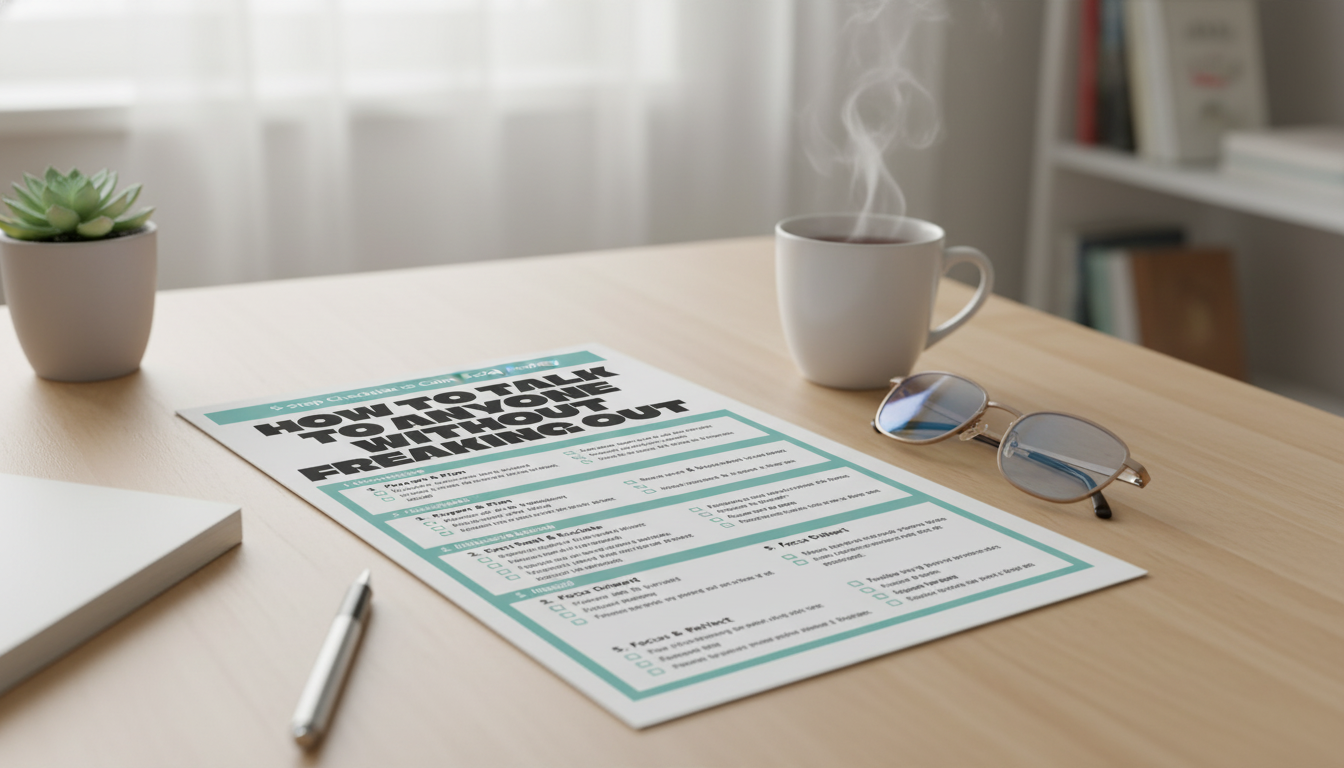
If you like having something you can glance at in the moment, the Confidence Kickstart Checklist: How to Talk to Anyone Without Freaking Out is a printable/digital download that’s easy to keep on a phone, tablet, or desk.
| Moment | Goal | What to do (1–2 minutes) |
|---|---|---|
| Before approaching | Settle the body | Slow exhale, drop shoulders, unclench jaw, pick a simple opener |
| First 30 seconds | Start smoothly | Smile lightly, say hi, use a context-based comment or question |
| During the chat | Stay present | Listen for one detail, reflect it back, ask one follow-up |
| If you go blank | Recover fast | Name the moment (“lost my thought”), ask a question, or return to context |
| Afterward | Build self-esteem | Write one win, one tweak, and one next time goal |
The goal isn’t to eliminate nerves—it’s to turn the volume down enough to function.
“Good” starters are usually simple, specific, and grounded in what’s already happening.
Aim for warm and simple. Confidence reads as ease, not impressiveness.
If you feel like you have to “entertain,” switch to a structure that keeps you present.
If you’re also working on overall stress skills, Calm With Smart Tools — AI-Enhanced Stress Relief Ebook for Home Wellness, Mindfulness & Relaxation can pair well with conversation practice by supporting daily nervous-system resets and self-regulation habits.
If starting conversations feels stressful, a small, repeatable routine can turn avoidance into manageable steps. The Confidence Kickstart Checklist: How to Talk to Anyone Without Freaking Out is a printable digital download built for everyday interactions at school, work, and social events—especially when your nerves try to talk you out of trying.
Do a short reset with a slow exhale, pick a micro-goal (like asking one question), and start with a context-based opener. Focus on listening for one detail you can reflect back and follow up on.
Name it briefly (“I lost my train of thought”), then return to the last thing they said and ask a follow-up question. If panic spikes, take a short break, breathe slowly, and rejoin or exit politely.
Practice on lower-stakes conversations first, plan one simple opener, and aim for a short interaction rather than a perfect one. Afterward, note one win and one small next step to try again soon.






Leave a comment