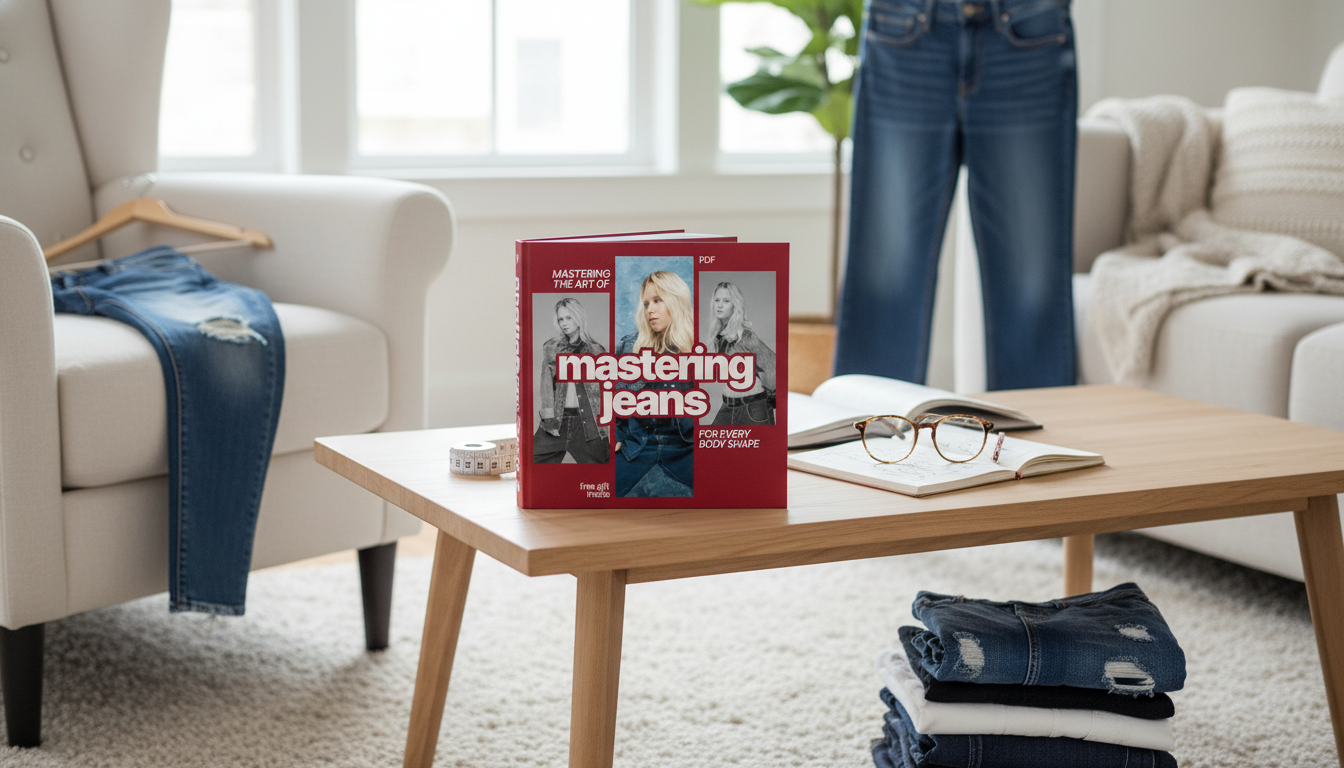
Great jeans don’t just “look good”—they behave. The waistband stays put when you sit, the seat lies smooth without sagging, and the leg line lands exactly where you want it. The secret is focusing on fit checkpoints (rise, waist, hip, thigh, inseam, fabric recovery) before getting swept up in a trend. Use the quick diagnostics below to narrow your choices fast, then fine-tune with smart styling and simple alterations so your denim lineup feels flattering, comfortable, and confidence-forward.
Grab a soft tape and measure: natural waist (smallest point), high hip (around the hip bones), full hip/seat (widest point), and inseam (crotch seam to ankle). These numbers help you choose a cut that fits your largest area first—often hips or thighs—then refine from there.
Low rise sits below the hip bones, mid rise lands near the high hip, and high rise sits closer to the natural waist. Rise often decides comfort and waist definition more than the number on the label—especially if you’re dealing with waist gaping or a waistband that slides down.
When you try jeans on, do a real-life test: sit, walk, and take a few steps up. The waistband should stay in place without digging, there should be minimal back gap, pockets should lie flat, the crotch seam should sit close without pulling, thighs should allow mobility, and hems should fall where the style intends.
Rigid 100% cotton feels structured and holds its silhouette. Denim with 1–3% elastane usually offers the sweet spot of comfort and shape retention. With 4%+ elastane, jeans can feel ultra-stretchy but may bag out if recovery is weak—test by stretching the fabric and seeing how quickly it snaps back.
Choose the size that fits your largest area comfortably, then tailor the waist if needed. Taking a waistband in is usually straightforward; trying to add room where there isn’t any is much harder.
Instead of boxing yourself into a category, pick 1–2 goals for your jeans to accomplish: define the waist, elongate the legs, smooth the tummy, balance shoulders and hips, highlight curves, or create curves where you want them.
Try a quick mirror test: if your waist is noticeably smaller than your hips, you’ll often love contoured waistbands and higher rises. If your shoulders feel broader than your hips, building volume at the hip line (bootcut, flare, wide-leg) can create visual balance. If your hips feel wider than your shoulders, streamlined hips plus a clean dark wash can feel instantly smoothing.
Keep a short list of non-negotiable comfort points. Common dealbreakers include a waistband that bites when seated, inner-thigh rubbing, or a tight top block that makes walking feel restricted.
| Body shape focus | Most flattering silhouettes | Rise & waistband notes | Details that help | Common fit trap to avoid |
|---|---|---|---|---|
| Hourglass / defined waist | High-rise skinny, straight, bootcut, flare | High rise + contoured waistband; consider curvy fits | Minimal hip whiskering; balanced pocket placement | Sizing down causes thigh strain and stress lines |
| Pear / hips fuller than shoulders | Straight, bootcut, flare, wide-leg | Mid-to-high rise to smooth waist/hip line | Darker wash; clean hip; slightly higher back pockets | Excessive distressing/fading on outer hips adds width |
| Apple / midsection fuller | Straight, slim straight, bootcut | Mid rise with supportive panel or wide waistband; avoid harsh low rise | Simple front; darker wash; longer inseam for line | Too-high rise that digs in when sitting |
| Rectangle / straighter waist-hip | High-rise wide-leg, mom, tapered, flare | High rise creates waist; belts work well | Seams, yokes, pocket details add curve | Overly stretchy fabric can look flat and lose structure |
| Inverted triangle / shoulders broader | Wide-leg, bootcut, flare, cargo-inspired | Mid rise; comfortable hip fit | Light/medium wash or subtle fading below hip adds balance | Skinny + dark wash can emphasize shoulder width |
For care guidance that protects fit and color over time, reference tips from Cotton Incorporated and washing best practices from Good Housekeeping. For brand-specific fit terminology, a general overview like the Levi’s women’s fit guide can help you translate rises and leg shapes across labels.
Aim for a waistband that stays in place when you sit and walk with minimal gaping. If hips and thighs fit well, tailoring the waist or choosing contoured/curvy waistbands is usually the cleanest fix.
High-rise often defines the waist and lengthens the leg line, but the most flattering rise is the one that stays comfortable when seated and doesn’t dig or roll. Mid-rise can look just as sleek and feels easier for many bodies.
About 1–3% elastane works well for many people because it adds comfort while keeping structure. Higher stretch can still perform if the denim has strong recovery—test whether it snaps back quickly after stretching.





Leave a comment