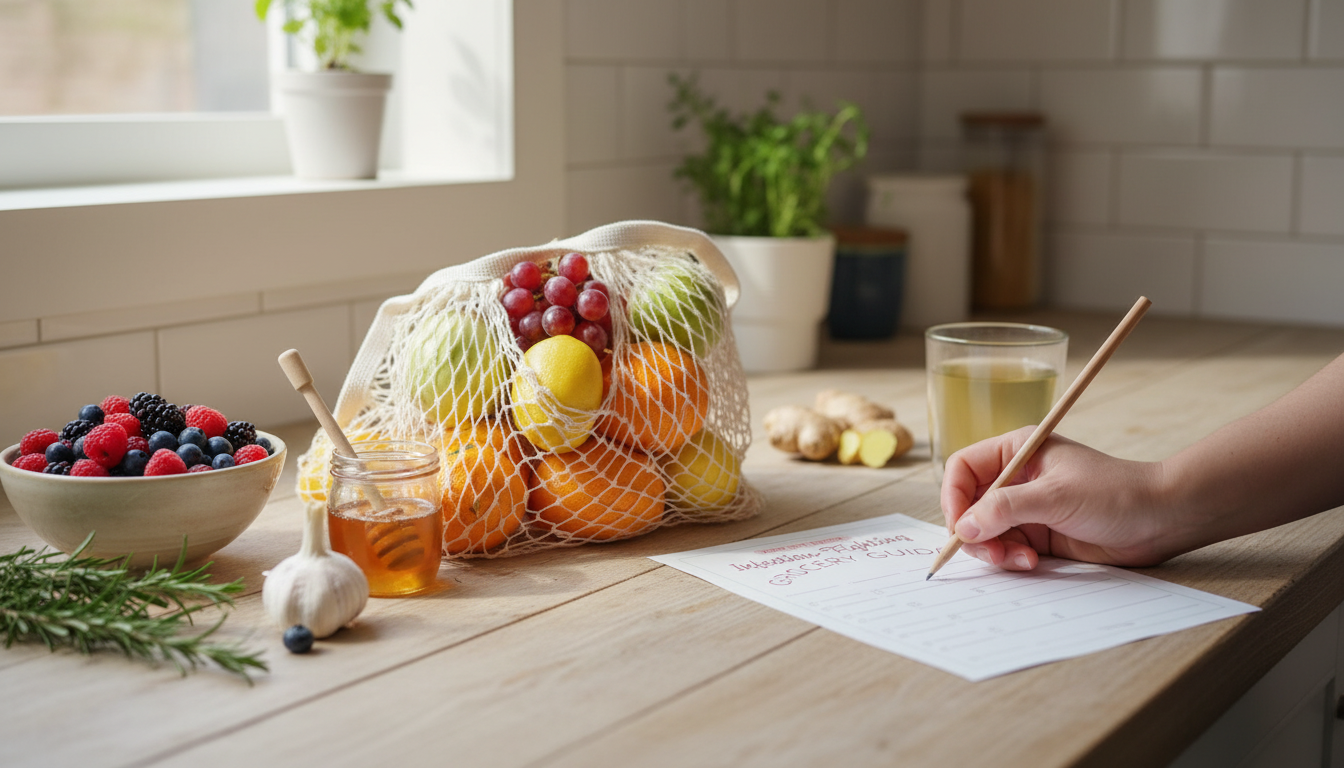
When a busy week hits, “eating well for immunity” can feel vague—until you turn it into a cart you can actually shop and a few meals you can repeat. The goal isn’t a perfect menu or a magic ingredient. It’s a steady pattern of protein, colorful plants, fiber, fluids, and a few smart staples that make balanced meals the easy default.
If you like a printable approach, the Infection-fighting grocery checklist and healthy eating planner printable is designed to speed up shopping and reduce decision fatigue, especially on weeks when you want structure.
Daily immune support is mostly about consistency. Adequate protein helps maintain the body’s normal immune responses, while key micronutrients (including vitamins A, C, and D, plus zinc and selenium) support many immune-related processes. Fiber and hydration help keep digestion regular and support the gut environment, which plays a role in overall health.
Food does not “cure” infections. Nutrition supports overall wellness and recovery, but persistent or severe symptoms still need appropriate medical care.
Diet is one important lever—alongside sleep quality, stress load, movement, and chronic condition management. If stress is a big factor, pairing healthy food habits with steady routines can help. For supportive tools, consider Calm and stress support tools for daily wellness routines.
Eggs, chicken, turkey, fish, tofu/tempeh, Greek yogurt, cottage cheese, lentils, and beans make meals more satisfying and keep nutrition steady when appetite varies.
Rotate citrus, berries, kiwi, bell peppers, leafy greens, broccoli, sweet potatoes, tomatoes, and mushrooms. A simple rule: buy at least three colors this week and make sure one is dark green.
Oats, barley, chia/flax, beans, onions/garlic, sauerkraut/kimchi, kefir, and yogurt with live cultures help increase fiber and add fermented options. Start small if you’re not used to them.
Olive oil, avocado, nuts, seeds, and fatty fish (like salmon or sardines) support nutrient absorption (especially fat-soluble vitamins) and help meals feel complete.
Ginger, turmeric, cinnamon, herbs, and garlic make simple foods taste better—so it’s easier to rely on whole foods instead of ultra-processed convenience items.
Instead of chasing every nutrient daily, use “coverage” across the week. Pairing and preparation matter too—like adding a little fat to carotenoid-rich vegetables or combining vitamin C foods with iron-rich plants.
| Nutrient focus | Top grocery picks | Easy way to use this week |
|---|---|---|
| Vitamin C | Oranges, kiwi, bell peppers, berries | Add peppers to eggs; snack on fruit; toss berries into yogurt |
| Vitamin A (carotenoids) | Sweet potato, carrots, spinach, kale | Roast sweet potatoes; sauté greens in olive oil |
| Vitamin D | Salmon, sardines, eggs, fortified milk/alt-milk | Salmon bowl; egg-based breakfast; fortified latte |
| Zinc | Pumpkin seeds, chickpeas, yogurt, beef | Blend hummus; top salads with seeds; yogurt snack |
| Protein | Chicken, tofu, lentils, Greek yogurt | Make one batch protein (lentils/tofu/chicken) for 3 meals |
For more detail on specific nutrients, see the NIH Office of Dietary Supplements on Vitamin C and Vitamin D.
Use this as a “fill in the blanks” cart. Choose what you like, then repeat a few meals without overthinking.
Food safety is part of staying well: wash produce, cook meats to safe temperatures, avoid cross-contamination, and refrigerate leftovers promptly. The CDC’s basics are a helpful refresher: Clean, Separate, Cook, Chill.
For a ready-to-print version that combines a cart checklist with a simple week planner, use the Infection-fighting grocery checklist and healthy eating planner printable.
No single food works instantly, but a consistent mix of protein, vitamin C-rich produce, zinc sources, and plenty of fluids supports normal immune function and recovery. When you don’t feel like eating, soups and smoothies can deliver nutrients and hydration in an easy form.
They’re useful, flavor-forward additions with beneficial compounds, but they work best as part of an overall pattern that includes adequate protein, fiber, sleep, and hydration. If you take blood thinners or have medical conditions, check with a clinician about concentrated supplements.
Keep it practical: frozen berries and vegetables, citrus, leafy greens, yogurt or kefir, eggs, beans or lentils, canned fish, oats, olive oil, garlic/ginger, and broth. With those basics, you can build repeatable bowls, soups, and quick breakfasts without extra planning.







Leave a comment