At-Home Dumbbell Strength Plan: From First Rep to Advanced Progress
A simple pair of dumbbells can cover full-body strength, muscle building, and fat-loss conditioning—without a gym. The key is a repeatable weekly structure, smart exercise choices, and progression rules that keep results coming even when home equipment is limited. Below is a practical approach that works for true beginners learning the basics and for experienced lifters who need more challenge from the same tools.
What a Dumbbell-Only Program Can Accomplish
Dumbbells are uniquely versatile because they allow natural joint paths and easy unilateral (single-arm/single-leg) training. With the right plan, a dumbbell-only setup can:
- Build muscle by training close to technical failure while using progressive overload—more reps, more load, more sets, or harder variations over time.
- Improve strength and joint stability through controlled tempos and unilateral work that exposes (and fixes) side-to-side imbalances.
- Support fat loss by pairing strength days with short, low-impact conditioning finishers plus a daily step goal.
- Reduce injury risk by balancing pushing and pulling volume, training the posterior chain (glutes/hamstrings/back), and keeping weekly volume aligned with recovery.
For general health targets, guidelines from the CDC and the American College of Sports Medicine (ACSM) recommend regular strength training alongside aerobic activity—both of which are achievable at home with dumbbells.
Getting Set Up: Equipment, Space, and Time
- Minimum setup: one or two dumbbells (adjustable if possible) and a stable chair/bench substitute for support work. A mat and a light resistance band can make warm-ups smoother.
- Space: enough room to hinge, lunge, and press overhead safely. Keep a clear “no-fly zone” around your feet and elbows so you don’t clip furniture or walls.
- Time options: 25–35 minutes for efficient sessions or 45–60 minutes for higher volume. Consistent, repeatable workouts beat occasional marathon sessions.
- Choosing weights: ideally a lighter option for raises/curls/longer sets and a heavier option for squats/hinges/rows. If weights are limited, make the exercise harder with slower tempo, pauses, unilateral variations, and shorter rest.
Warm-Up and Technique Cues That Make Progress Stick
Most home training plateaus come from rushing warm-ups or letting form slide. Use this quick routine and a few “always-on” cues.
5–8 minute warm-up flow
- Brisk walk, marching, or step-ups: 1–2 minutes
- Hip hinge patterning (hands on hips, push hips back): 8–10 reps
- Shoulder circles and arm swings: 20–30 seconds
- Bodyweight squats: 8–12 reps
- One light set of your first two lifts (about 50–70% effort)
Technique cues that carry over
- Core bracing: exhale slightly, tighten as if preparing for a light punch, and keep ribs stacked over pelvis during presses and rows.
- Hinge pattern: push hips back, keep shins more vertical, maintain a long spine, and feel the work in glutes/hamstrings (not your low back).
- Pressing: wrists stacked over elbows, controlled descent, and stop sets when you start arching hard, flaring elbows aggressively, or “bouncing” reps.
Weekly Structure (Beginner, Intermediate, Advanced)
Your best weekly split is the one you can repeat for months. Match your schedule to your recovery, then progress gradually.
Suggested weekly schedules
| Level |
Days/Week |
Template |
Notes |
| Beginner |
3 |
Full-body A / Full-body B / Full-body A (alternate weekly) |
Learn form, build habit, moderate effort |
| Intermediate |
4 |
Upper / Lower / Rest / Upper / Lower |
Add volume gradually, track reps and loads |
| Advanced |
5–6 |
Upper / Lower / Push / Pull / Legs (+ optional conditioning) |
Use advanced methods when loads are limited |
Recovery basics: keep 1–2 easier days weekly, prioritize sleep consistency, and aim for daily steps. Soreness isn’t required—improving performance is the goal.
Workout Templates You Can Rotate
Choose a template that fits your week, then rotate variations when you need fresh stimulus or when a joint needs a break.
Full-Body A (2–4 sets each)
- Goblet squat
- Dumbbell floor press
- One-arm dumbbell row
- Romanian deadlift
- Standing overhead press
- Farmer carry or plank
Full-Body B (2–4 sets each)
- Split squat or reverse lunge
- Incline push-up or press variation (floor press, neutral-grip press)
- Hip-hinged row (chest-supported substitute)
- Hip thrust or glute bridge
- Lateral raise
- Curl or overhead triceps extension
Upper/Lower options (intermediate+)
Progression Rules (So the Plan Never Stalls)
Build Muscle and Burn Fat: Simple Nutrition and Conditioning Add-Ons
For more general fitness and safety basics, MedlinePlus has a helpful overview of exercise and physical fitness.
Common Mistakes and Quick Fixes
Printable Plan Option
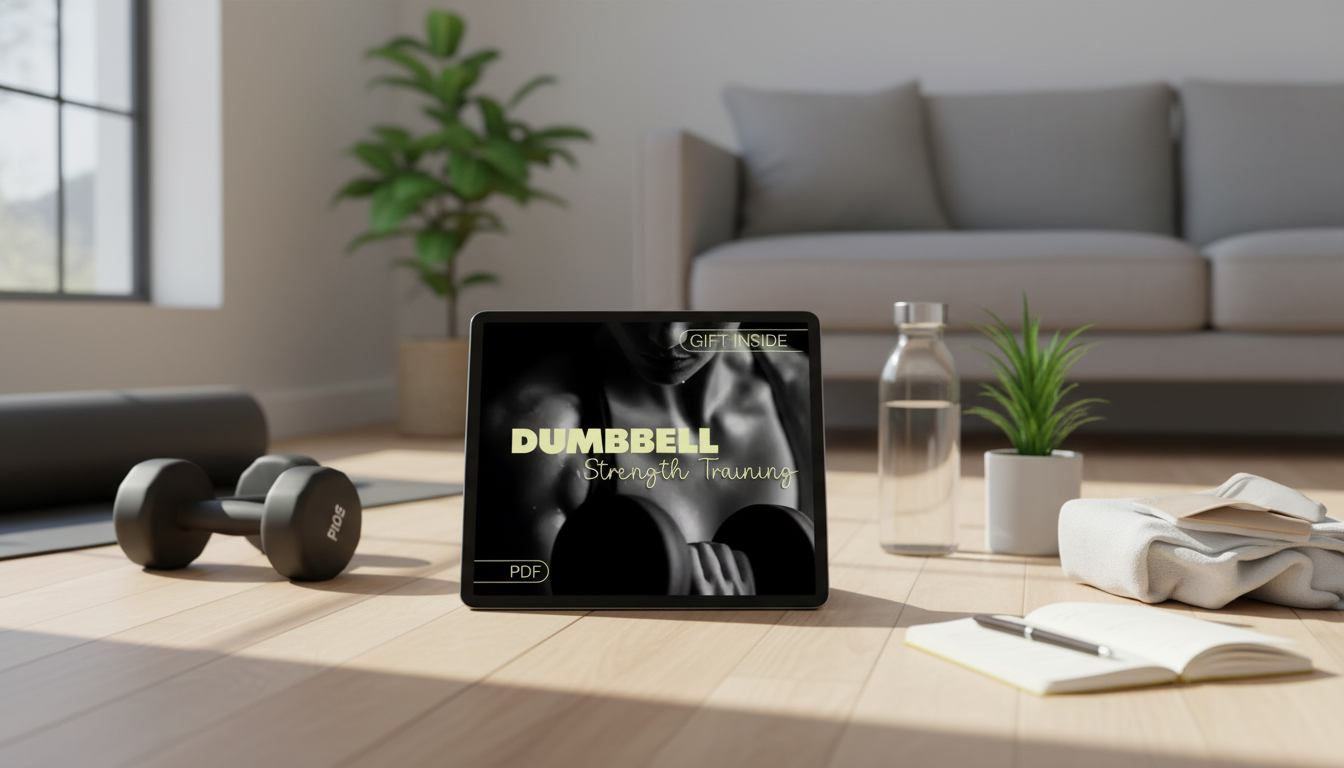
If you prefer a ready-to-use format with built-in structure and space to log progress, a digital plan can remove friction and keep training consistent. Consider the Dumbbell Strength Training Guide PDF (digital download) for a clear progression path from beginner to advanced.
To support recovery and a calmer routine around training, these at-home resources may also fit well into your weekly rhythm: Calm With Smart Tools — AI-Enhanced Stress Relief Ebook and Mastering Furniture Arrangement for Calm and Clarity (helpful if you’re carving out a clean, safe training space at home).
FAQ
How many days per week should a beginner lift with dumbbells at home?
Three full-body days per week with rest days between sessions is a strong starting point. Focus on learning the movement patterns, keep volume moderate, and progress steadily week to week.
Can muscle be built with only dumbbells if the weights are not very heavy?
Yes. Use unilateral exercises, higher reps, slower tempos, pauses, extra sets, and shorter rest periods to increase difficulty, and train close to technical failure without letting form break down.
How long should an at-home dumbbell workout take to be effective?
About 25–60 minutes works well depending on how many sets you’re doing. Prioritize 4–6 key movements, repeat the plan consistently each week, and apply progressive overload over time.
Recommended for you







Leave a comment