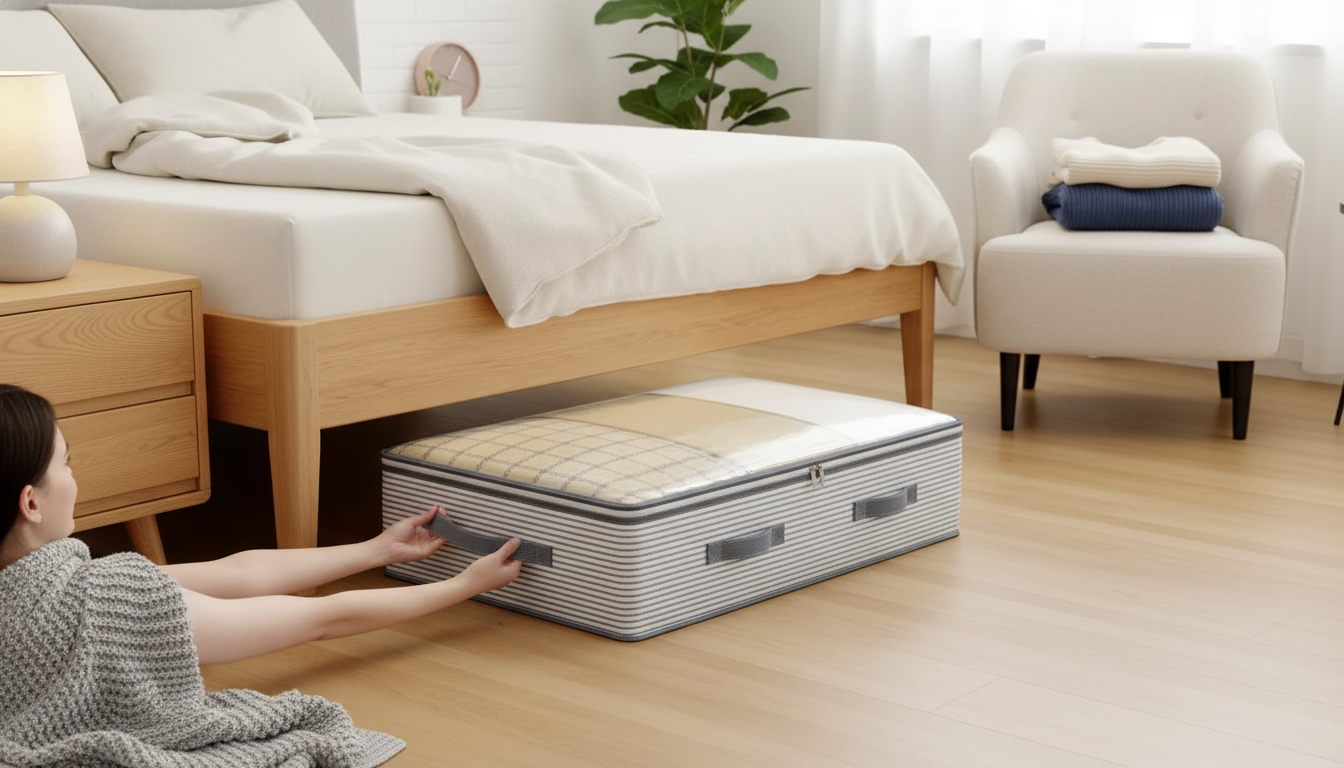
Bulky quilts, seasonal clothing, and spare bedding can quickly take over closets and shelves. A large-capacity non-woven storage bag organizer keeps soft goods protected, grouped by season or room, and easier to move from closet to under-bed or shelf storage—without relying on rigid bins that waste space. If you’re trying to make a small closet feel bigger (or keep guest linens ready without the pile-up), a soft-sided organizer is one of the simplest upgrades you can make.
Non-woven fabric is a practical middle ground between open-air shelf stacking and fully sealed plastic. It’s designed to be light, flexible, and easy to handle—especially when you’re storing soft items that don’t need a rigid container.
For moisture-sensitive households, it also helps to understand what drives musty odors: dampness plus time. If you’re dealing with humidity, review guidance on moisture control from the EPA (Mold and Moisture) and the CDC (Preventing Mold Growth in the Home).
The easiest way to avoid zipper strain (and that overstuffed “bubble” look) is to plan around how textiles naturally compress. Quilts and comforters compress well, while coats and structured garments need more breathing room to keep their loft and shape.
| Item type | Best fold method | Packing tip | Best storage location |
|---|---|---|---|
| Quilts/comforters | Fold into thirds, then roll | Keep one bag per bed size for easier rotation | Top shelf or under-bed (if clearance allows) |
| Blankets/throws | Fold into rectangles | Stack by thickness to prevent bulging | Closet shelf |
| Sweaters/knits | Fold flat | Add a fresh liner sheet to reduce pilling from friction | Drawer overflow shelf |
| Coats/jackets | Fold sleeves inward | Avoid crushing delicate insulation; don’t overpack | Seasonal closet zone |
| Sheet sets | Fold into a bundle | Store each set together to speed up bed changes | Linen closet |
A flexible organizer earns its keep because it can move with your routines: guest room today, dorm move-out tomorrow, back-of-closet the rest of the year.
If you’re refreshing a room along with your storage system, a layout tweak can make closets and shelves feel less cramped. Pairing simple storage with a calmer room plan can be a one-two punch for visual clutter—see Mastering Furniture Arrangement for Calm and Clarity for ideas on flow and balanced placement.
For a quick refresher on washing and drying best practices, the American Cleaning Institute’s Laundry Basics is a helpful reference—especially for bulky loads like comforters that can hold moisture in thicker sections.
If you’re building a more peaceful home routine at the same time, small organization wins can reduce day-to-day friction. For a complementary reset, Calm With Smart Tools — AI-Enhanced Stress Relief Ebook can pair nicely with a declutter-and-simplify weekend.
Yes—when stored in a dry indoor space and only after items are clean and fully dry. Avoid damp areas, don’t overcompress, and air out and refold seasonally to keep loft and freshness.
Often, yes, because non-woven material can be more breathable and helps reduce trapped odors in closets. Plastic can hold moisture if clothing isn’t completely dry before packing.
Fold neatly, don’t overstuff, and store in a cool, dry place with a breathable sachet if desired. Recheck seasonally to refold and let items air briefly.





Leave a comment