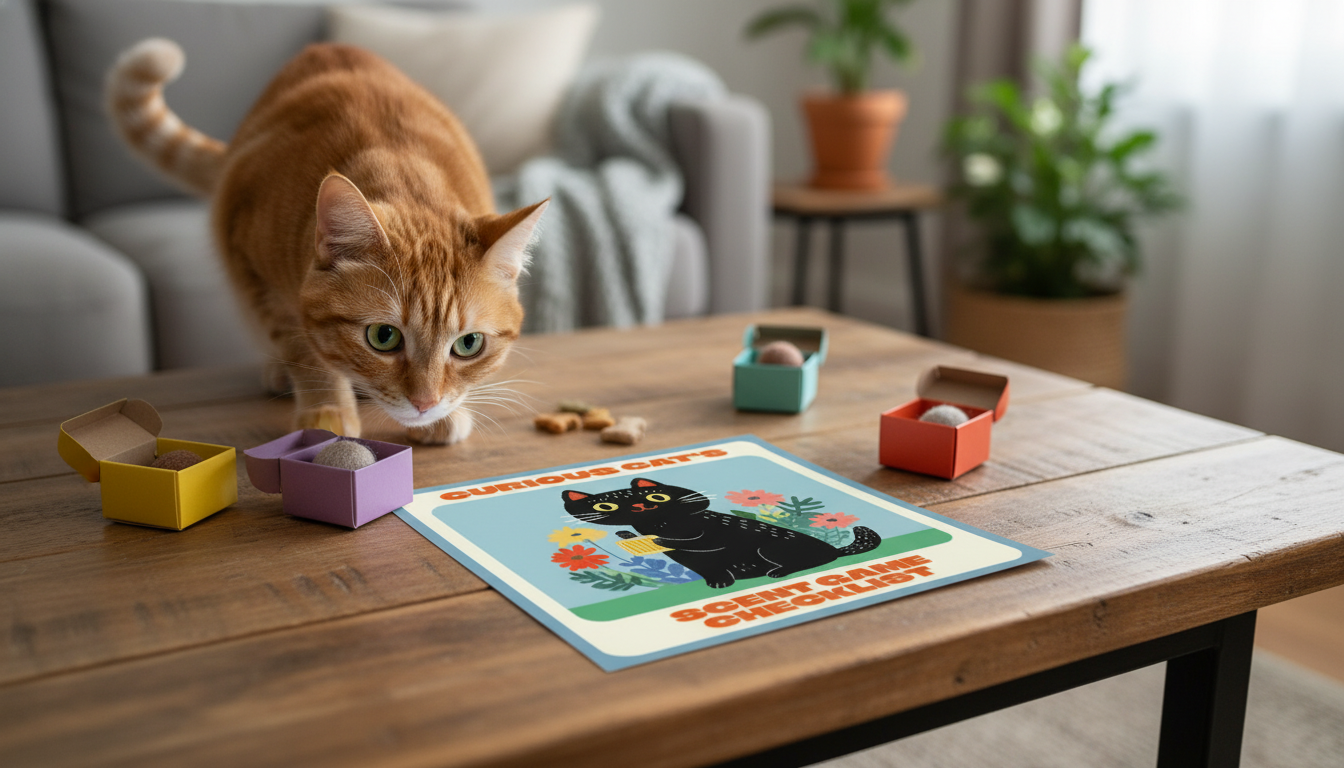
Scent play is a quiet kind of fun that feels “big” to a cat. It taps into natural tracking and hunting instincts without requiring a long hallway, a tall cat tree, or a noisy toy. With a printable checklist, it’s also easier to stay consistent: rotate a few simple games, notice which setups your cat prefers, and keep enrichment steady for indoor cats, high-energy kittens, or cats who do best with calmer, structured play.
Cats experience their world through smell far more than many people realize. A short “sniff-and-search” session can be surprisingly satisfying—even when you only have a few minutes.
For broader enrichment guidance and play ideas, see resources from International Cat Care and the American Association of Feline Practitioners (AAFP).
Consistency is usually what makes enrichment “stick.” The checklist format helps turn a handful of easy games into a repeatable routine.
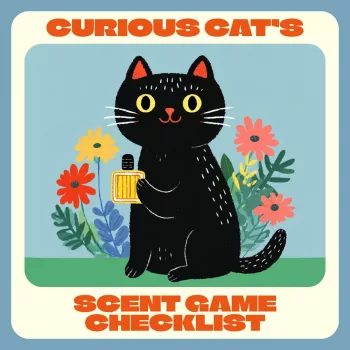
If you want a ready-to-use tracker you can reuse week after week, try The Curious Cat’s Scent Game Checklist (digital download).
The goal is a calm, easy win—especially for a first session. Keep rewards tiny, keep hiding spots obvious, and stop before your cat gets bored or frustrated.
| Level | Setup | What the cat does | Good for |
|---|---|---|---|
| 1: Intro sniff | Treat under a cup in plain view | Sniffs, paws, tips cup | Shy cats, first session |
| 2: Simple search | Treats placed in 3–5 visible spots | Scans and walks to each find | Indoor cats needing movement |
| 3: Hidden finds | Treats behind a chair leg or under a paper scrap (not sealed) | Uses nose to locate partially hidden reward | Curious, food-motivated cats |
| 4: Choice challenge | One scented cup has treat, others empty | Discriminates and selects | Cats that enjoy puzzles |
| 5: Mini trail | A short “trail” of tiny crumbs leading to jackpot | Follows scent path | High-energy cats |
Rotations keep games fresh without reinventing the wheel. Swap only one variable at a time (new room, new hiding style, different reward) so your cat can succeed quickly.
For cats who enjoy routine, a simple “enrichment corner” can make sessions smoother. If you’re adjusting a room layout to create a calmer play zone (without clutter or blocked pathways), Mastering Furniture Arrangement for Calm and Clarity can help you plan a quiet, repeatable setup.
| Day | Game | Difficulty | What to record |
|---|---|---|---|
| Mon | Cup in plain view | Level 1 | Time to solve, comfort level |
| Wed | Simple search (visible spots) | Level 2 | Preferred hiding spot patterns |
| Fri | Hidden finds (partially covered) | Level 3 | Frustration signs or smooth success |
| Sun | Mini trail to jackpot | Level 4–5 | Trail length tolerated |
If your household routine is stressful (for you or your cat), building a calmer evening wind-down can help everything run smoother. Some cat owners pair enrichment time with their own relaxation habits using guides like Calm With Smart Tools — AI-Enhanced Stress Relief Ebook.
Most cats do best with 5–10 minutes. End while your cat is still interested, then gradually increase only if they stay relaxed and eager.
No—avoid essential oils and strong fragrances around cats. Stick to cat-appropriate options like food-based scents, catnip, or silvervine if your cat tolerates it well.
Lower the difficulty right away: make rewards easier to access, shorten the session, and return to a game your cat has already “won” before. Keeping sessions easy and positive prevents frustration from becoming avoidance.




Leave a comment