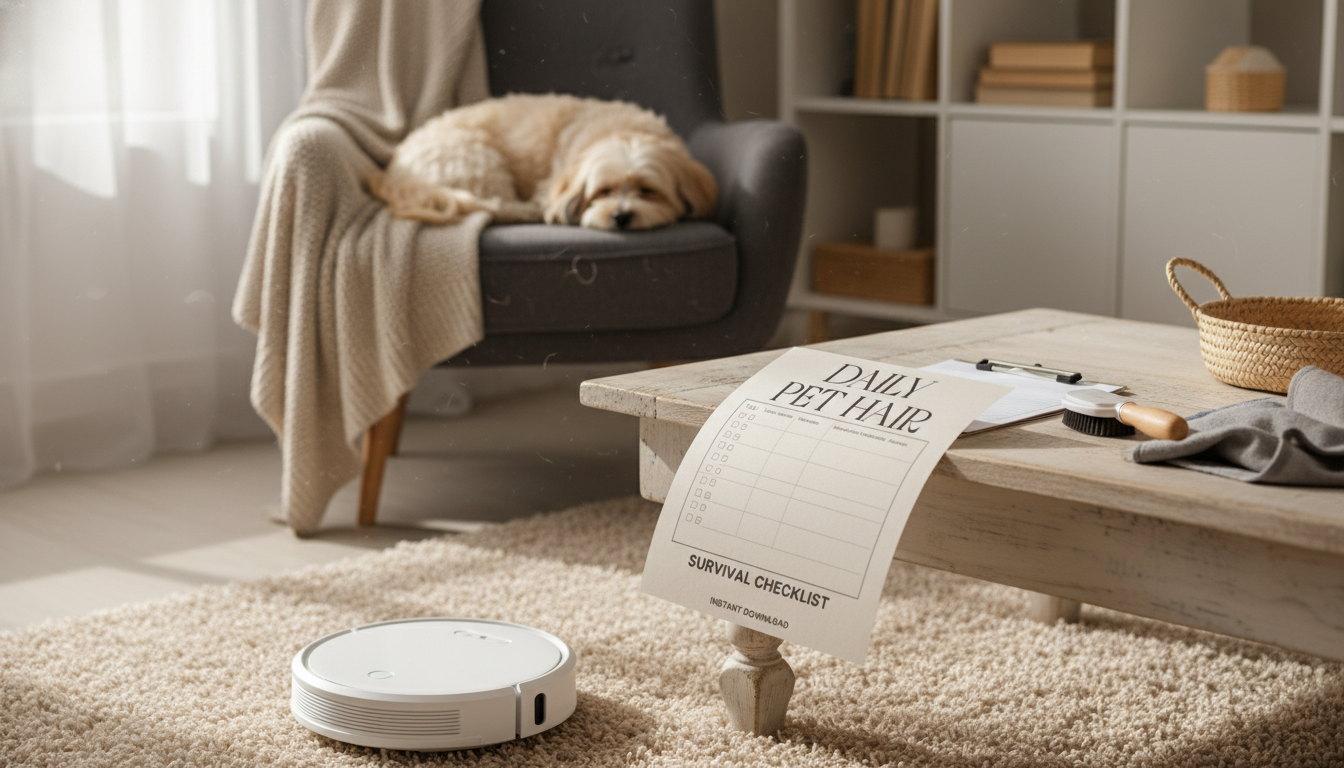
Pet hair spreads fast—onto rugs, sofas, bedding, car seats, and even clothes that just came out of the dryer. The good news: a simple, repeatable routine keeps fur from building up, helps keep allergens lower, and makes deep-clean days dramatically easier. The goal isn’t perfection—it’s containment. With a quick daily reset, a once-a-week “stop the spread” reset, and grooming habits that reduce shedding at the source, cleaner floors and furniture become the default instead of a weekend project.
For allergy and indoor air-quality context, resources from the American Lung Association and the CDC are helpful reminders that dander and hair management is about comfort, not just appearances.
Think of daily hair control like brushing teeth: small effort, huge payoff. Keep this routine under 10 minutes so it’s easy to repeat.
If decision fatigue is the problem, a single-page routine helps. The Daily Pet Hair Survival Checklist is designed to be printed or used digitally, so the “what do I do first?” moment disappears.
Cleaning works best when it’s paired with shedding control. Grooming isn’t only about looks—it’s how you intercept loose hair before it lands on furniture.
| Coat type | Quick routine | Best time to do it | What it prevents |
|---|---|---|---|
| Short coat | 3–5 minutes brushing | Before evening relax time | Hair on couch and bedding |
| Medium/long coat | 10 minutes brushing + comb check | After walks | Knots that shed more and cling |
| Double coat | Brush + undercoat rake as needed | During seasonal coat blow | Tumbleweeds on floors |
| Curly/wavy coat | Brush + light detangle | Before bathing day | Matting that traps debris |
For cat-specific grooming tips and safe handling reminders, the ASPCA cat grooming guide is a solid reference.
Pet hair is oddly “grippy,” so the right materials matter. A few smart tools prevent repeat passes and save time.
If hair is sticking to everyday outfits, a fabric-focused system can help. Pairing a consistent laundry routine with a wardrobe plan—like the guidance in Your Ultimate Guide to the Perfect White Tee—makes it easier to choose materials and care habits that don’t hold onto fur as stubbornly.
The easiest homes to maintain don’t chase every strand. They use simple “barriers” and predictable zones to keep hair contained.
If car mess tends to snowball into bigger decisions (like seat covers, detailing, or even a vehicle change), having a clear cost-and-feature framework helps. New vs Used Cars: The Real Math Behind Your Next Ride is a practical companion for evaluating options without guesswork.
Do a 60–120 second pass with a reusable fur remover or lint roller, focusing on cushions, seams, and the spot your pet uses most. Keeping one washable throw as a barrier cuts daily buildup dramatically.
Hair can get trapped in fabric weaves and held by static, especially on knits and fleece. Pre-shake items, wash heavily shed loads separately, and use dryer balls while cleaning the lint trap each cycle; an air-only tumble first can help loosen hair before washing.
Weekly works best for heavy shedders or allergy concerns, while every two weeks can be enough for lighter shedding. Shake bedding outside and vacuum the surface first to remove loose hair so the washer can clean more effectively.






Leave a comment