Beginner’s Reptile Care Checklist: Setup, Feeding, Handling, and Simple Monitoring
A new reptile thrives when the basics are consistent: correct temperatures, safe lighting, clean water, species-appropriate food, and calm handling. The checklist below breaks the process into clear steps—what to prep before pickup, how to build a stable habitat, what to do on a daily/weekly rhythm, and how to spot early health signals—so your first setup feels manageable from day one.
Before You Bring Your Reptile Home
- Confirm the exact species and life stage (hatchling/juvenile/adult) so enclosure footprint, perch height, and diet match what your animal actually needs.
- Locate an exotics veterinarian now (not later). The Association of Reptile and Amphibian Veterinarians (ARAV) Find a Vet directory is a solid starting point.
- Choose a habitat location away from drafts, direct sun, HVAC vents, and constant foot traffic (temperature swings and vibration can add stress).
- If you already own reptiles, plan a quarantine space (ideally a separate room). Separate tools for cleaning/feeding reduces cross-contamination.
- Gather essentials before pickup so you don’t rely on “temporary” heat, lighting, or substrate choices that can create immediate problems.
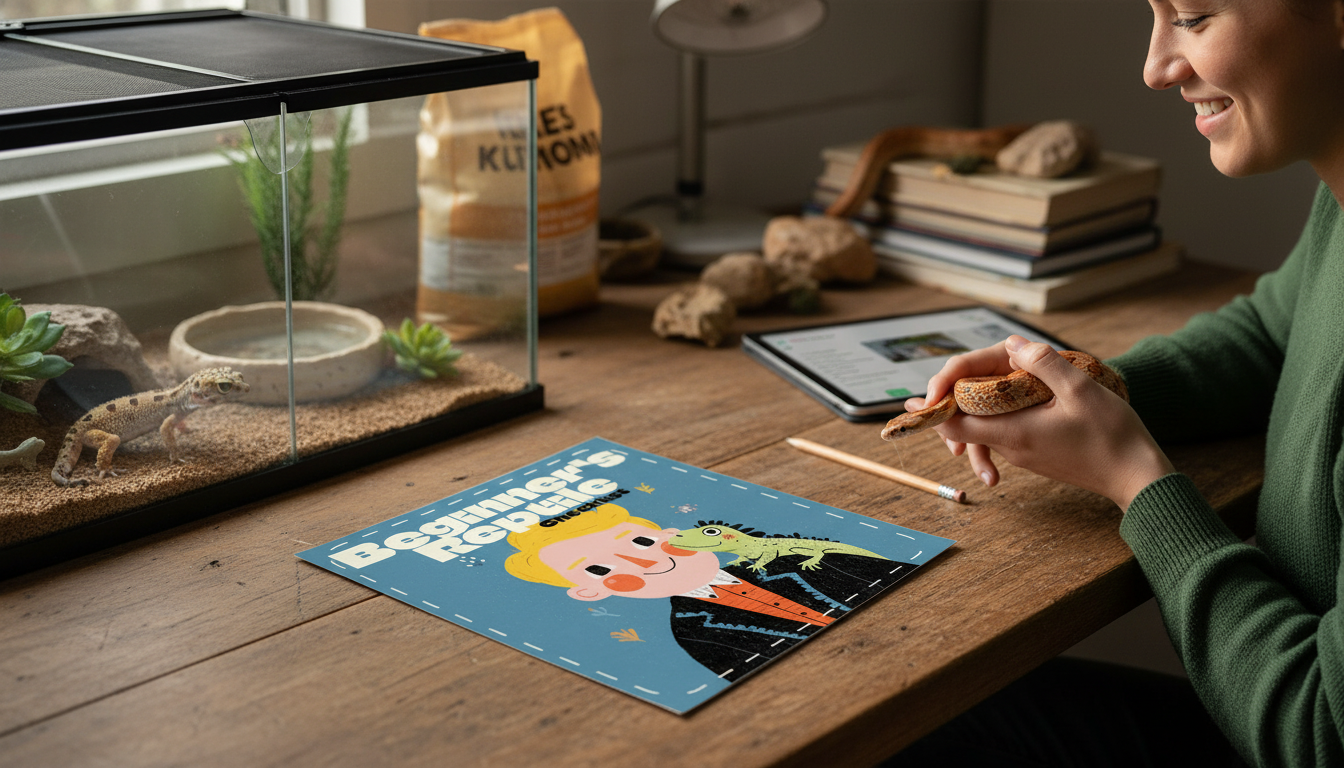
If you want everything in one place to print and keep near the enclosure, use the Beginner’s Reptile Checklist printable download to track setup steps and the first 30 days of routine.
Habitat Setup: Temperature, Light, Humidity, and Safety
- Choose an enclosure with secure ventilation and escape-proof locks; confirm the species’ minimum footprint and (if arboreal) height needs.
- Create a thermal gradient: warm side, cool side, and a basking zone (when applicable). Reptiles regulate body temperature by moving between zones.
- Use thermostats for heat sources. Unregulated heat mats and lamps can overheat quickly and cause burns.
- Provide UVB if your species requires it. Replace UVB bulbs on schedule even if they still look bright—visible light isn’t the same as UV output.
- Set humidity based on species using a hygrometer. Adjust with appropriate substrate, controlled misting, and adequate ventilation (stagnant damp air can be as problematic as air that’s too dry).
- Add at least two hides (warm side and cool side), plus climbing/cover items that fit the species (stable branches, foliage, ledges).
- Select substrate with safety in mind: avoid aromatic woods; avoid loose substrate for animals prone to impaction or that strike food hard on the ground.
- Add a stable water dish sized for drinking and, if typical for your species, soaking; prioritize easy cleaning.
Quick Setup Checklist (Adjust Targets to Your Species)
| Category |
What to Install |
What to Verify |
Common Mistake to Avoid |
| Heat |
Primary heat source + thermostat |
Warm/cool zones are measurable |
Using heat without a thermostat |
| Lighting |
Day/night cycle; UVB if needed |
Bulb distance and replacement schedule |
Assuming all reptiles need the same UVB |
| Humidity |
Hygrometer; humidity plan |
Humidity stays stable across the week |
Over-misting without airflow |
| Furnishings |
Hides, branches, basking platform |
No sharp edges; items are stable |
Loose decor that can topple |
| Water |
Dish sized for drinking/soaking |
Fresh, dechlorinated as needed |
Letting biofilm build up |
For general guidance on responsible exotic pet care and expectations, review the American Veterinary Medical Association (AVMA) overview of exotic pets. It’s a helpful reminder that species differences matter.
Feeding Basics: What, When, and How Much
- Use a species-correct diet (insectivore, herbivore, omnivore, carnivore). “One food fits all” is a common path to deficiencies.
- Match feeding frequency to age: juveniles often need more frequent meals than adults, with careful portion sizes.
- Use calcium and vitamin supplementation only as appropriate for the species and your UVB/lighting plan. More isn’t always better.
- Provide clean water daily. Some species prefer droplets; others use bowls—many do best when both options are supported.
- Keep prey/produce size safe (for many lizards, prey should be no wider than the space between the eyes).
- Remove uneaten live feeders promptly so they can’t bite, stress, or disturb your reptile at rest.
- Track appetite and stool/urates. Sudden changes often point to husbandry issues (temperature, hydration, stress) before anything else.
If you’re shopping for greens and vegetables for herbivores or omnivores, a seasonal plan can make variety easier. The Seasonal Shopper’s Guide to Farmers Markets can help organize produce options and rotate choices throughout the year.
Daily, Weekly, and Monthly Care Rhythm
Daily
Weekly
Monthly
Handling and Stress Reduction for New Owners
Lighting consistency also affects stress and appetite. If you’re trying to standardize timers and “lights on/lights off” habits, the Mood Lighting in the Bedroom: Easy Tips Checklist can be repurposed as a simple reminder system for keeping lighting routines consistent (while still following reptile-safe bulbs and fixtures).
Simple Monitoring: Logs, Photos, and Smart Alerts
When in doubt, contacting an exotics professional early can prevent small husbandry issues from becoming medical emergencies. If you need a refresher on welfare basics, the RSPCA’s guidance on reptiles as pets is a helpful overview.
Printable Checklist: Keep Everything in One Place
FAQ
What should be purchased before bringing a reptile home?
Have the enclosure fully equipped first: thermostats, heat and UVB (if needed), accurate thermometers/hygrometers, hides, water dish, safe substrate, a food plan, supplements if applicable, basic cleaning supplies, and a saved exotics vet contact.
How often should temperatures and humidity be checked?
Check at least daily, and more often during the first week, after changing bulbs or substrate, and during seasonal temperature shifts. Alerts are useful, but readings should be verified with reliable devices placed where your reptile actually lives (warm side, cool side, and basking zone).
Are AI monitoring tips reliable for reptile care?
They’re best used for reminders and trend spotting, not as a replacement for correct husbandry or veterinary advice. Confirm any suggestion with real measurements and your reptile’s physical behavior and condition.
Recommended for you






Leave a comment