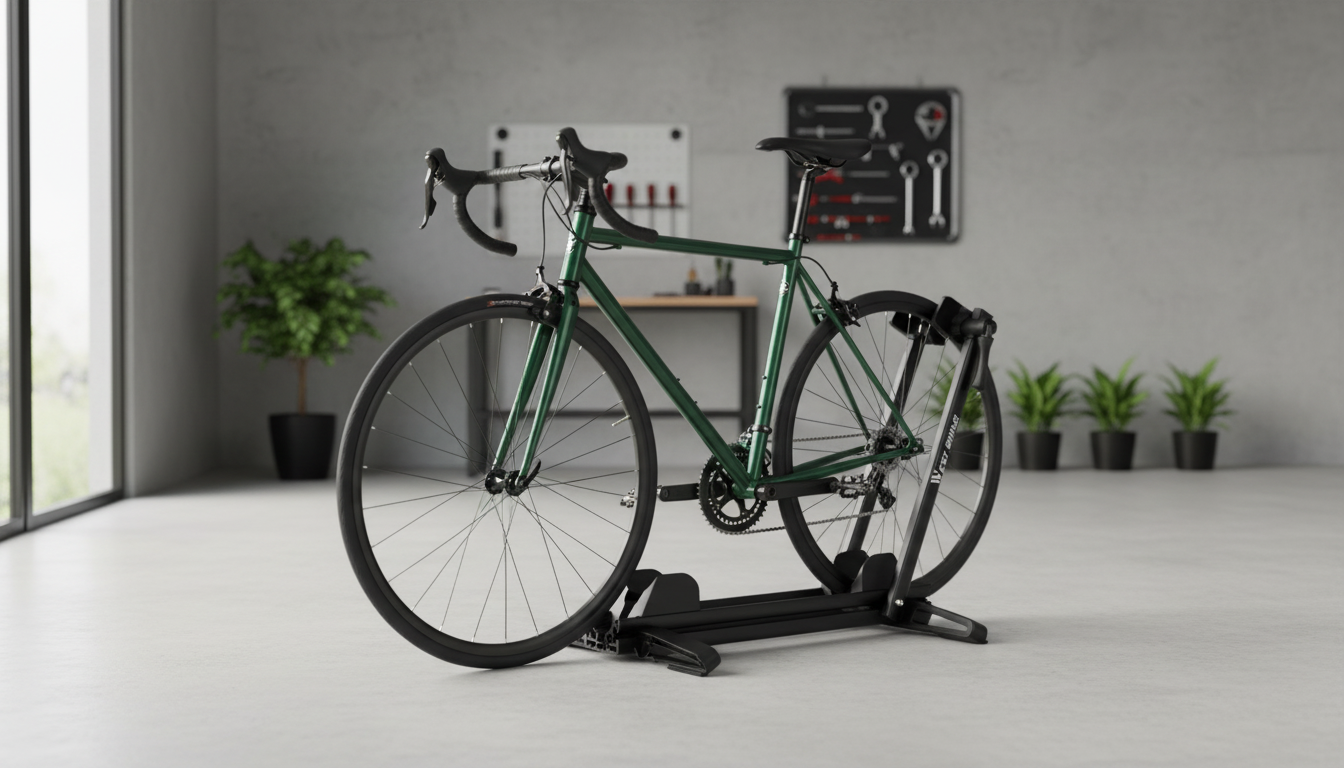
A floor bike parking rack stand keeps bikes upright, organized, and easier to grab for quick rides—without drilling into walls or ceiling joists. This guide breaks down why this style of stand is a smart fit for MTB and road bikes, what to measure before buying, and how to set it up for stable, tidy garage or indoor storage that doesn’t feel like a daily obstacle course. For more guidance, see Adjustable Bike Floor Stand, Universal Bike Parking Rack with Anti.
Floor stands solve the most common “where do I put this bike?” problems without turning your wall into a project.
Most “it doesn’t fit” frustrations come down to a few quick measurements. Take two minutes to check the wheel and tire you’ll actually be parking (not just what the bike came with years ago).
| What to measure | Target range | Why it matters | Quick tip |
|---|---|---|---|
| Tire width | Road ~23–32mm; Gravel ~35–50mm; MTB ~2.1–2.6in+ | Prevents pinching the tire or unstable fit | Measure the actual tire at its widest point |
| Wheel size | 26″, 27.5″, 29″, 700c | Ensures the wheel sits securely in the cradle | Check the bike’s sidewall marking |
| Brake type | Rim or disc | Avoids rotor contact and scuffs | Spin the wheel after placing it to confirm clearance |
| Available floor footprint | Measure length × depth | Determines where the bike can be parked without blocking doors | Tape the outline on the floor first |
| Number of bikes | 1+ | Impacts spacing and organization plan | Stagger handlebars by alternating direction when possible |
If the goal is simple, stable parking without committing to wall anchors, a freestanding rack is an easy win. The Floor Bike Parking Rack Stand for MTB & Road Bikes Indoor Garage Storage is built for indoor floor placement, helping bikes stay upright and neatly “parked” where you want them.
Where you place a floor stand matters as much as the stand itself. A good spot reduces dirt, prevents collisions, and keeps the bike easy to grab.
For maintenance guidance and bike-safe handling tips, Park Tool’s repair help library is a solid reference: https://www.parktool.com/blog/repair-help. For deeper technical background on sizing and standards, Sheldon Brown’s resource is a classic: https://www.sheldonbrown.com/.
If your bikes live in the garage because they regularly travel with you, it can also help to keep a basic roadside plan nearby. The guide When Your Car Quits Far From Home: The Ultimate Roadside Emergency Guide for Safe and Smart Recovery is an easy-to-store reference for trip prep and unexpected breakdown situations.
Yes, as long as the stand’s wheel size support and tire-width range match your specific bike. Wider MTB tires and some fenders may require extra clearance, so it’s worth measuring before buying.
Generally yes, provided the rotor doesn’t contact the stand. After parking, spin the wheel to confirm there’s no rubbing and that the wheel slides in smoothly.
Leave enough room for handlebars, pedals, and a comfortable walking path, and account for car door swing if parking nearby. Using painter’s tape to outline the footprint on the floor helps confirm the layout before you commit.






Leave a comment