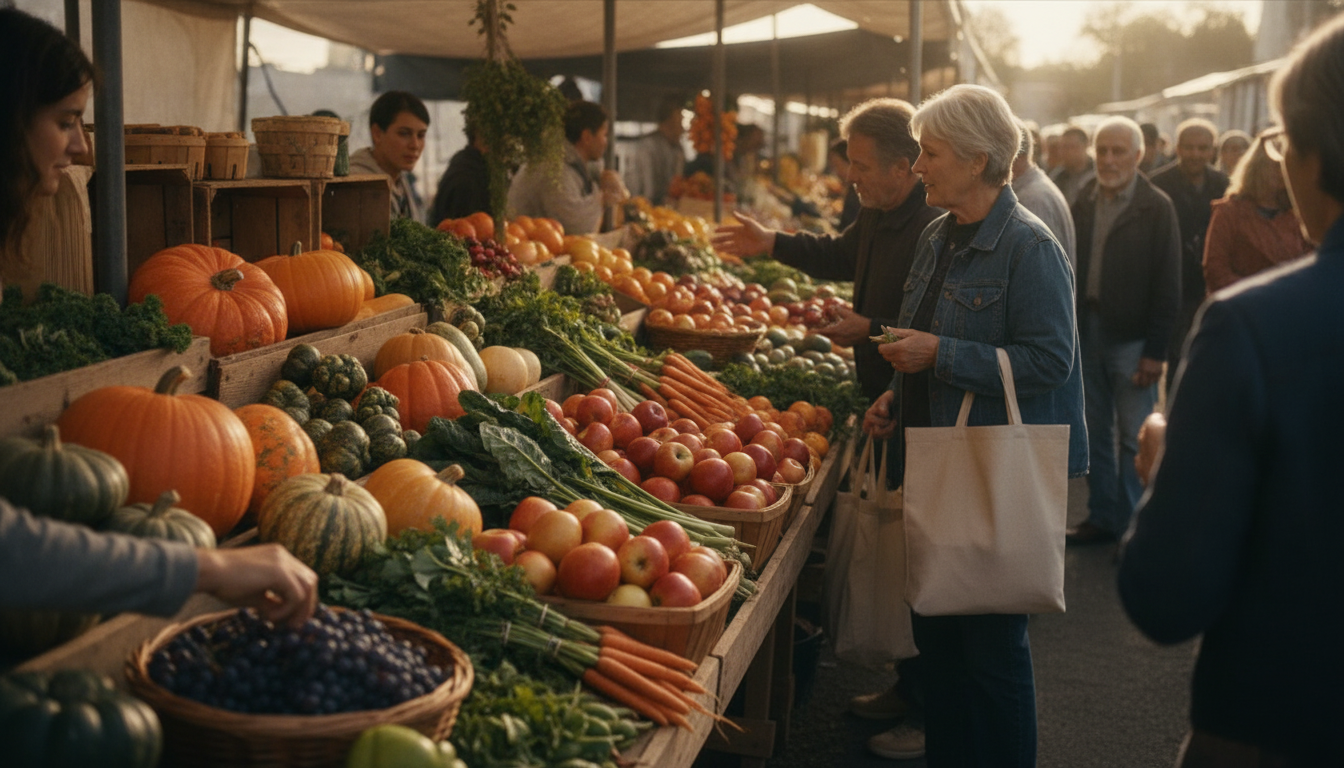
Farmers markets aren’t static—what’s overflowing one month might be scarce (or gone) the next. Shopping with the seasons helps you buy produce that’s more likely to taste better and hold up longer once you get it home. When fruits and vegetables are picked closer to ripeness, you’ll usually notice a bigger payoff in flavor, texture, and aroma—often at a better price, too.
Seasonal timing also makes it easier to spot what’s truly local. If every stall suddenly has the same greens or the same variety of apple, that’s a clue you’re seeing a real harvest window instead of something shipped in from far away. It’s also an easy way to vary nutrients across the year: rotate tender spring greens, summer’s colorful fruit, fall’s hearty squash, and winter’s storage crops and brassicas.
Use the chart below as a flexible starting point. Exact timing changes by region, elevation, and the year’s weather. When something shows up “early,” it’s often smaller and pricier; when it hits “peak,” that’s usually when you’ll find the best flavor and the friendliest deals.
| Season | What’s often abundant | Best uses | Quick freshness cues |
|---|---|---|---|
| Spring | Asparagus, peas, radishes, spinach, strawberries (late spring) | Salads, quick sautés, bright herb sauces | Firm asparagus tips, crisp radishes, perky greens, fragrant berries |
| Summer | Tomatoes, cucumbers, zucchini, peaches, corn, berries | Fresh salsas, grilling, stone-fruit desserts, big salads | Tomatoes smell sweet at the stem, corn husks feel moist, berries are dry (not leaking) |
| Fall | Apples, pears, squash, pumpkins, sweet potatoes, kale | Roasting, soups, baking, meal prep | Squash feels heavy, apples are unbruised and aromatic, kale is deep green and not wilted |
| Winter | Citrus (in many regions), carrots, beets, cabbage, stored onions, hardy greens | Braising, slaws, stews, roasting | Cabbage is tight and heavy, roots are firm, citrus feels weighty for its size |
For regional timing help, the USDA Seasonal Produce Guide is a reliable reference point, especially when you’re comparing what you see at the market to what should be peaking nearby.
A smooth market run starts before you leave the house. Check hours, parking tips, and weekly harvest updates—many markets post highlights and vendor news online. If you’re traveling, the USDA Farmers Market Directory is helpful for finding markets by city or zip code.
That first lap also reduces impulse buys. If you spot something special, you can always circle back—especially if it’s a sturdy item like apples, onions, or winter squash.
The easiest upgrade in market shopping is learning what “fresh” looks like. Start with overall condition: crisp leaves, firm roots, bright color, and minimal bruising. Then get curious—vendors usually know exactly which variety is sweetest, which tomato holds up for slicing, and which peach is ready today versus tomorrow.
For food-safety basics—especially if you’re washing and prepping right away—follow guidance from FoodSafety.gov on rinsing and handling produce.
If you want a ready-to-use option built for repeat use all year, consider A Seasonal Shopper’s Guide to Farmers Markets: Your Ultimate Digital Resource for Seasonal Produce & Farmers Market Shopping (digital download). It’s designed around practical market-day routines, seasonal lists, and storage-friendly habits.
Arrive early for the widest selection and limited items (like peak berries or specialty mushrooms). Go later if you’re hoping for end-of-day bundles or discounts; a quick first lap helps you compare before buying either way.
Ask vendors about the harvest date and where it was grown, then compare what shows up across multiple stalls—true seasonal items tend to appear everywhere at once. Keeping a simple seasonal reference list helps, but expect timing to vary by region and weather.
Keep berries dry and unwashed until you’re ready to eat them, and remove any crushed fruit immediately so it doesn’t spread moisture. For leafy greens, remove tight bands, add a towel for moisture control, and store with airflow; wash and spin right before use (or batch-prep only if you can dry them well).







Leave a comment