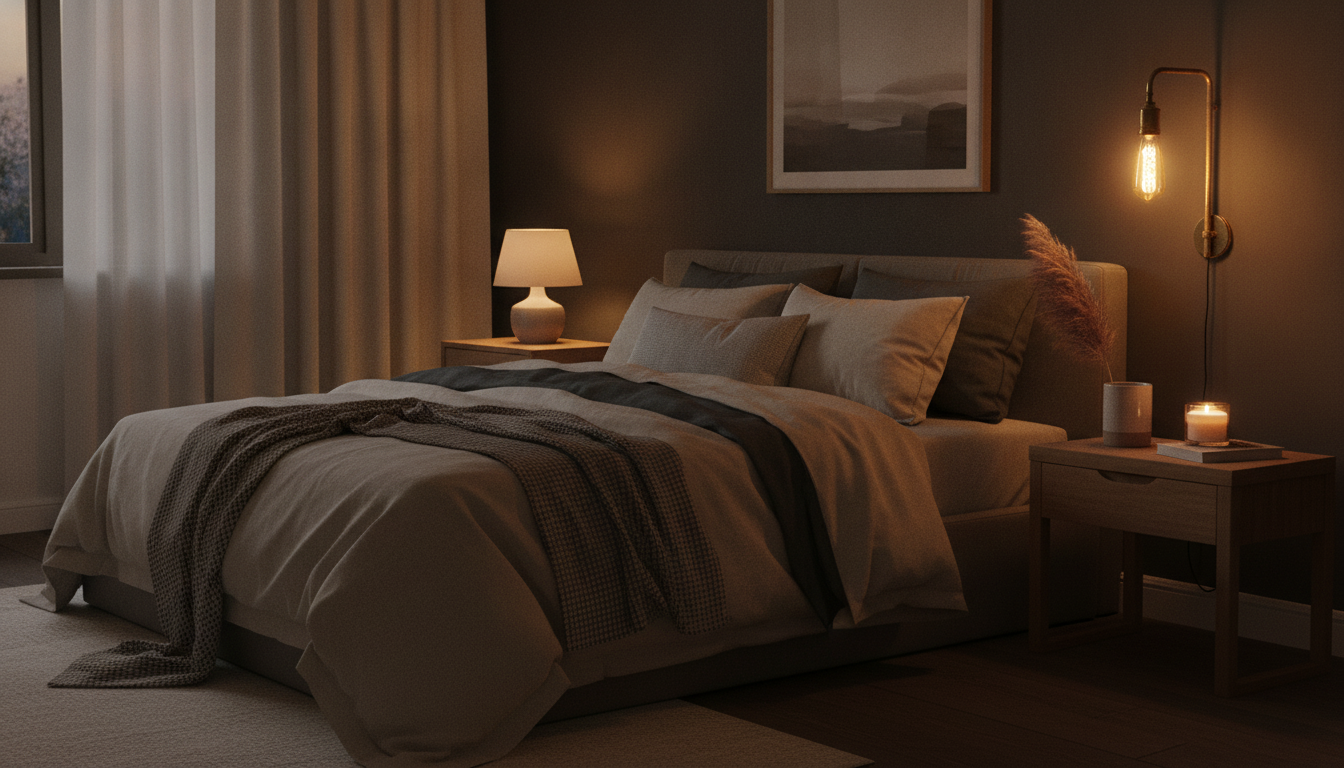
Bedroom lighting quietly controls how the space feels at night—whether it reads as harsh and “awake” or soft and safe enough to let your mind power down. The goal isn’t a dramatic redesign; it’s creating a few warm, flexible light layers so you can read comfortably, reset the room quickly, and keep nighttime light low without stumbling around.
Below is a checklist-style guide built around practical upgrades—many of them inexpensive—that make the biggest difference when the overhead light is off.
Start With One Goal: Relax, Read, or Reset
- Pick a primary evening use-case. Decide if the room is mainly for winding down, reading in bed, or a flexible mix.
- Choose your vibe: “candle-warm” (extra cozy), “hotel-soft” (clean and gentle), or “minimal and dark” (lowest light possible).
- Treat the ceiling light as optional at night. The best mood usually comes from several small sources instead of one bright one.
- Aim for control. The same bedroom should support brighter, practical light when you need it, and softer light when you don’t.
The Quick Bedroom Mood Lighting Checklist
- Use at least 3 light sources: one near the bed, one across the room, and one accent (shelf, headboard, or corner).
- Choose warm color temperature bulbs for evening (often labeled “soft white,” typically around 2700K–3000K).
- Add dimming (dimmer switch, plug-in dimmer, or dimmable bulbs) so the room can shift from functional to restful.
- Avoid bare bulbs or exposed bright LEDs in direct line of sight from the pillow.
- Place lights lower than eye level when possible (nightstands, dressers, low shelves) to reduce glare.
- Create a “path” light: a faint glow from the hallway, an under-bed strip, or a small night light to navigate without overhead lighting.
- Keep reflective glare down: angle lampshades away from mirrors and glossy closet doors.
- Match shades and diffusers: fabric or frosted glass softens light; clear glass usually looks harsher.
- Set a nightly routine: dim lights 60–90 minutes before sleep and keep brightness minimal after getting into bed.
Bedroom mood lighting settings (easy reference)
| Scenario |
Brightness feel |
Best light sources |
Color tone |
Placement tip |
| Wind-down before sleep |
Low |
Table lamp + accent glow |
Warm (2700K–3000K) |
Keep light below eye level; avoid facing the bed directly |
| Reading in bed |
Medium |
Adjustable bedside lamp/sconce |
Warm to neutral-warm |
Aim beam at book; keep partner side dim |
| Late-night bathroom trip |
Very low |
Night light / under-bed strip |
Warm/amber |
Indirect glow along floor path |
| Getting dressed |
Medium-high |
Lamp(s) near closet + overhead briefly |
Neutral-warm |
Light from both sides to reduce harsh shadows |
| Weekend reset / tidy up |
High |
Overhead + task lamp |
Neutral |
Use bright light temporarily, then return to warm dim lighting |
Layering: Ambient, Task, and Accent (The Secret to “Cozy”)
- Ambient lighting sets the overall glow. Lamps with shades, wall sconces, or diffused fixtures create a gentle base layer.
- Task lighting targets activities. A reading lamp with an adjustable neck lets you keep the rest of the room dim.
- Accent lighting adds depth. Small lights behind plants, on shelves, or along headboards create soft highlights and prevent the room from looking “flat.”
- Balance the room. One side shouldn’t be dramatically brighter than the other unless you’re intentionally creating a reading zone.
Bulb Choices That Instantly Improve the Mood
- Warm bulbs for evening make walls and textiles feel softer and less clinical.
- Dimmable LEDs are often the biggest upgrade per dollar—brightness control matters more than fancy fixtures.
- Try “warm-dim” (dim-to-warm) bulbs if you want a candle-like shift as you lower the lights.
- Avoid flicker and harshness by choosing reputable bulbs instead of ultra-cheap LEDs that can feel straining in a dark room.
For a deeper look at how light influences sleep timing and alertness, see Sleep Foundation: How Light Affects Sleep and Harvard Health Publishing: Blue light has a dark side. For efficiency basics and why LEDs are a smart long-term choice, reference the U.S. Department of Energy LED lighting guide.
Placement Tricks: Make a Small Room Feel Calmer
Simple Upgrades That Feel Luxurious
If a printable, step-by-step plan helps you move faster, the Mood Lighting in the Bedroom: Easy Tips Checklist is a simple way to map bulb warmth, placement, and dimming in one place.
Common Mistakes That Ruin Bedroom Ambience (and Easy Fixes)
A One-Night Setup Plan (Do This in 30–60 Minutes)
Printable Checklist Option
For a separate kind of “reset” that pairs well with a calmer home routine, A Seasonal Shopper’s Guide to Farmers Markets can help streamline weekly shopping and make weekends feel less rushed.
FAQ
What type of light is best for a relaxing bedroom at night?
Warm, dimmable light is typically best—think “soft white” bulbs around 2700K–3000K, used in shaded lamps rather than a bright overhead fixture. Indirect placement (aimed at walls or diffused through fabric) keeps the room calm and glare-free.
How many lights should a bedroom have for good ambience?
Three or more is a great baseline: one near the bed, one across the room, and one accent or path light. Layering reduces harsh shadows and lets you keep overall brightness lower while still seeing clearly.
How can the bedroom stay dark enough for sleep but still be safe at night?
Use very low-level path lighting—like an under-bed strip, a warm night light, or gentle hallway spill—positioned to glow along the floor instead of shining into your eyes. Amber or warm tones help keep the light soft and less stimulating.
Recommended for you





Leave a comment