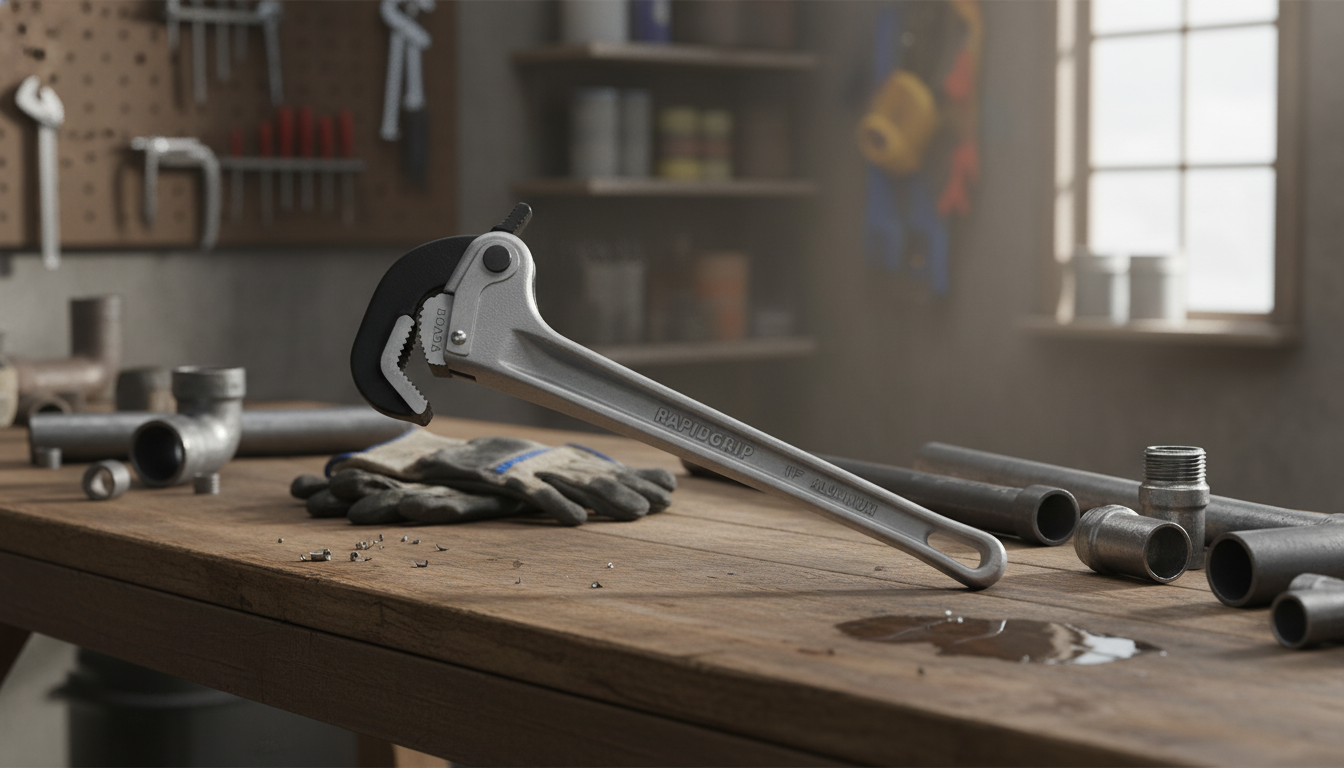
An aluminum pipe wrench keeps the classic biting-jaw hold plumbers rely on, but trims weight for easier carry, overhead work, and long service calls. The right size, jaw capacity, and handle length matter as much as the alloy—especially when dealing with stuck fittings, delicate finishes, or tight spaces. For more guidance, see Milwaukee 10 Aluminum Pipe Wrench reviews and… – Revain.
A pipe wrench is built to turn round workpieces—steel pipe, nipples, couplings, and threaded fittings—using serrated jaws that increase their bite as torque increases. That self-energizing grip is why it’s the go-to tool for threaded pipe connections that won’t budge. For further reading, see File:Trimo pattern Aluminum Pipe Wrenches.jpg.
The biggest day-to-day advantage is weight. On ladders, in crawlspaces, and during repeated repositioning on long runs, a lighter wrench makes work feel more controlled and less exhausting. Many aluminum models pair an aluminum handle/body with hardened steel jaws and teeth, putting durability where it counts: on the biting surfaces.
Pipe wrench sizing is less about “bigger is better” and more about choosing the right leverage for the space you’re working in. Handle length drives torque: a longer wrench can break fittings loose more easily, but it also needs more swing room. Jaw capacity must match the pipe’s outside diameter; if you’re maxed out at the end of the adjustment range, tooth engagement can suffer.
| Length | Best for | Typical tradeoffs |
|---|---|---|
| 10–12 in | Tight spaces, small nipples, valves under sinks | Limited leverage on seized fittings |
| 14–18 in | General service work, most household and light commercial pipe connections | May be tight in cramped mechanical chases |
| 24 in+ | Larger pipe, stubborn joints, mechanical rooms with space | Heavier and bulkier; requires more clearance |
Two pipe wrenches of the same length can feel very different in use. Details in the head and adjustment mechanism affect speed, bite, and confidence—especially when you’re working in awkward positions.
Most pipe-wrench problems come from setup: the jaw isn’t square, the teeth are dirty, or the load is being carried by only part of the jaw. A few habits reduce slip and reduce the chance of chewed-up fittings.
For general hand-tool safety practices, review OSHA’s guidance on tool condition and safe use: https://www.osha.gov/hand-and-power-tools. For broader hand-tool expectations and terminology, ASME’s B107 standards overview is a helpful reference point: https://www.asme.org/codes-standards/find-codes-standards/b107-hand-tools.
Yes—like any serrated-jaw pipe wrench, it can leave tooth marks on most metals. Marking is usually acceptable on black iron or galvanized pipe, but for plated, polished, or soft fittings, use a strap wrench or a protective shim/padding to avoid cosmetic damage.
An 18-inch wrench is a strong all-around option because it balances leverage with reasonable clearance in many service situations. Step down to a 10–12 inch wrench for tight cabinets and valves, and step up to 24 inches or longer for larger pipe or stubborn joints with plenty of swing room.
Keep the wrench square to the pipe, set the jaw so the teeth fully engage, and clean debris from the teeth before pulling. When possible, use a two-wrench technique to hold back on the mating fitting, and avoid unsafe cheater bars that can overload the tool or damage threads.







Leave a comment