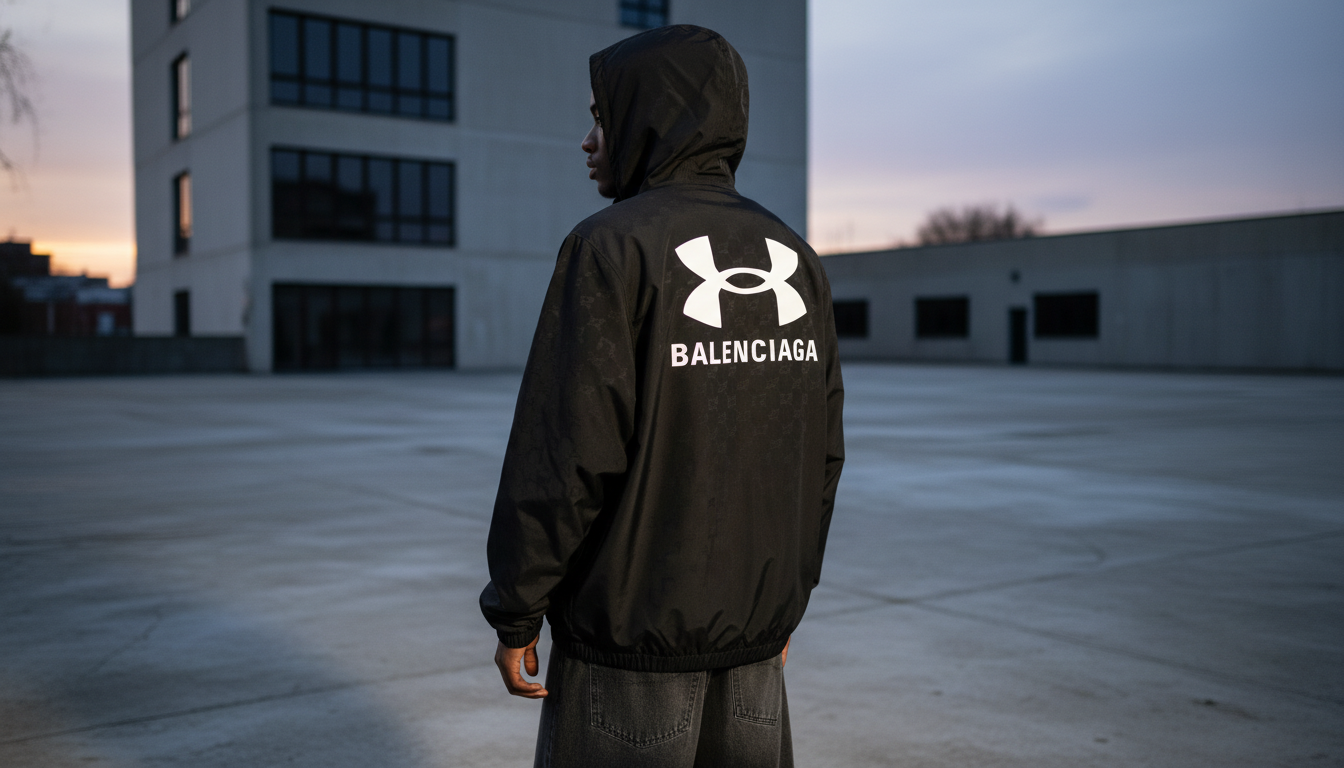
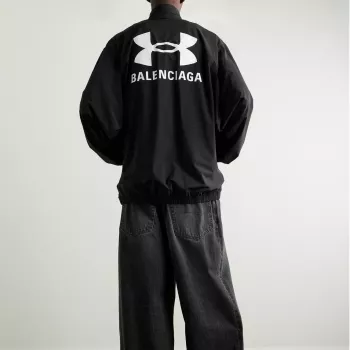
An oversized hooded jacket in a monochrome palette leans into Balenciaga’s signature street-luxe attitude: bold proportions, minimal color, and branding that reads as intentional rather than loud. This piece is designed to anchor outfits year-round—layered over knits in cold weather or thrown on as a statement outer layer when temperatures shift. The oversized cut prioritizes comfort and styling flexibility, while the monogram detail adds a recognizable finish that still plays well with neutral wardrobes.
| Detail | What to look for | Why it matters |
|---|---|---|
| Fit | Roomy body and sleeves; length that can sit low on the hip | Creates the intended Balenciaga proportion and allows layering |
| Color story | Single-tone body with tonal branding | Makes outfits look cohesive and easy to style |
| Hood | Structured enough to hold shape; adjustable if present | Adds function and balances the oversized cut |
| Branding | Monogram placement that feels integrated | Gives identity without overpowering the look |
| Use case | City wear, commuting, travel, casual nights out | Helps decide if the statement proportion fits daily needs |
Monochrome doesn’t mean plain—it means disciplined. When the color is controlled, details like seam lines, collar/hood architecture, and the way the fabric holds volume become the “design language.” The best oversized jackets feel sculpted even when worn casually, creating that runway-to-street attitude with minimal effort.
The easiest way to make oversized read “intentional” is to pick one anchor point: either a clean neckline/hood frame or a strong hem line. If the shoulders collapse or the sleeve length forces constant cuffing, the jacket can look accidental instead of designed. When it’s right, the jacket moves freely, the hood sits neatly, and the proportion feels consistent from front to back.
Fabric structure is the quiet difference-maker. A well-built oversized jacket keeps its silhouette while you walk, sit, and layer—so it looks polished even with casual pieces like sweats or denim. If you want more background on how textiles are categorized and constructed, Encyclopaedia Britannica’s overview of textiles is a helpful reference point.
Care labels are meant to be used—especially for outerwear with branded details and structured components. For a clear explanation of standardized care instructions in the U.S., the Federal Trade Commission’s guide to care labeling is a practical resource. When in doubt, avoid high heat and aggressive chemicals; they’re common culprits behind warped shape and compromised finishes.
When evaluating any designer outerwear, consistency is the tell: aligned seams, even topstitching, and branding that looks integrated rather than “added on.” For broader brand context and official references, visit the Balenciaga official website.
An intentional oversized fit can sit slightly dropped at the shoulder, but it should still feel stable at the neckline and upper back. If the jacket pulls when you move your arms or collapses forward, it’s likely too big or the cut isn’t sitting correctly for your frame.
Build depth with tonal shade variation and texture—think charcoal with black, or cream with off-white, paired with denim or knits. Keep accessories minimal and let footwear (chunky sneakers vs. sleek boots) set the mood.
Follow the care label, spot clean quickly, and air it out between wears to preserve shape and branding. Store it on a supportive hanger and avoid high heat or harsh cleaners that can affect monogram finishes.





Leave a comment