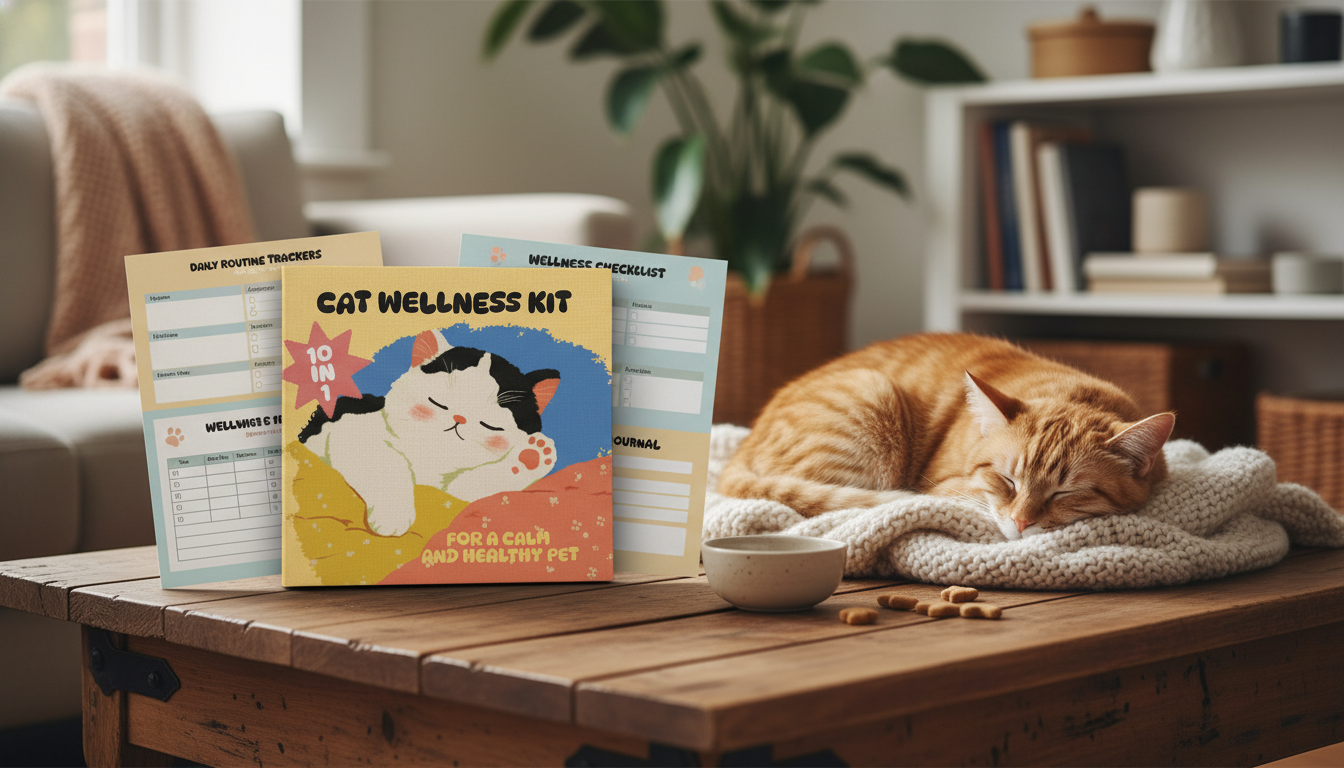
A calm cat is often a healthier cat—especially when daily routines, environment, and enrichment are consistent. A digital wellness bundle can make it easier to track habits, reduce common stressors, and spot small changes early. With a simple set of printable pages (or a tablet-friendly workflow), it becomes easier to notice patterns in appetite, litter box habits, sleep, play, and mood—then adjust your home setup before small issues grow.
If you’d like an all-in-one set of trackers and planning pages, start with the Cat Wellness Kit for a Calm and Healthy Pet – 10-in-1 Digital Download Bundle and build a system that fits your household and your cat’s personality.
Tracking doesn’t need to be intense. The goal is clarity: what’s normal for your cat, what changed, and what else was happening in the home when it changed. For guidance on feline health topics and when to seek care, reputable references include the Cornell Feline Health Center and the American Veterinary Medical Association (AVMA) pet care resources.
| Tool | What it tracks | Why it matters | How often to update |
|---|---|---|---|
| Daily routine tracker | Meals, water, play, sleep | Stability lowers anxiety; patterns reveal changes | Daily (2–5 minutes) |
| Litter box log | Urination/stool frequency, changes | Helps identify urinary/stomach concerns early | Daily or as observed |
| Mood & behavior notes | Hiding, vocalizing, aggression, appetite shifts | Links stress behaviors to triggers | Daily during transitions; weekly otherwise |
| Vet visit prep sheet | Symptoms timeline, questions, meds | Improves clarity during appointments | Before each visit |
| Enrichment planner | Play sessions, puzzle use, rotation | Prevents boredom and stress behaviors | Weekly |
If multiple people care for your cat, keep rules simple: one person records meals, another logs litter observations, and everyone writes a quick mood note if something unusual happens (hiding, hissing, yowling at night).
Household calm matters, too. If you’re also working on a less chaotic home environment, the Mastering Furniture Arrangement for Calm and Clarity guide can help you think through traffic flow and quiet zones so your cat’s safe spaces stay low-traffic.
Behavior resources from International Cat Care can be helpful when you’re trying to tell the difference between normal cat preferences and stress-related signals—especially during household transitions.
To keep your system sustainable, pair your trackers with a simple reset routine for the humans in the home as well. The Calm With Smart Tools — AI-Enhanced Stress Relief Ebook can support consistent habits so the cat’s routines stay steady during busy weeks.
Some cats relax within a few days when meals and play happen at predictable times and a quiet retreat is available. Others may take 2–4 weeks to settle, so focus on trends across the week instead of any single day.
Start with appetite/water, litter box habits, and one quick behavior or mood note. These are high-signal indicators that take very little time to record and can highlight changes early.
No—tracking is a support tool for organization and early detection, not a substitute for medical care. Contact a veterinarian for persistent changes, signs of pain, straining in the litter box, or a rapid decline in behavior.






Leave a comment