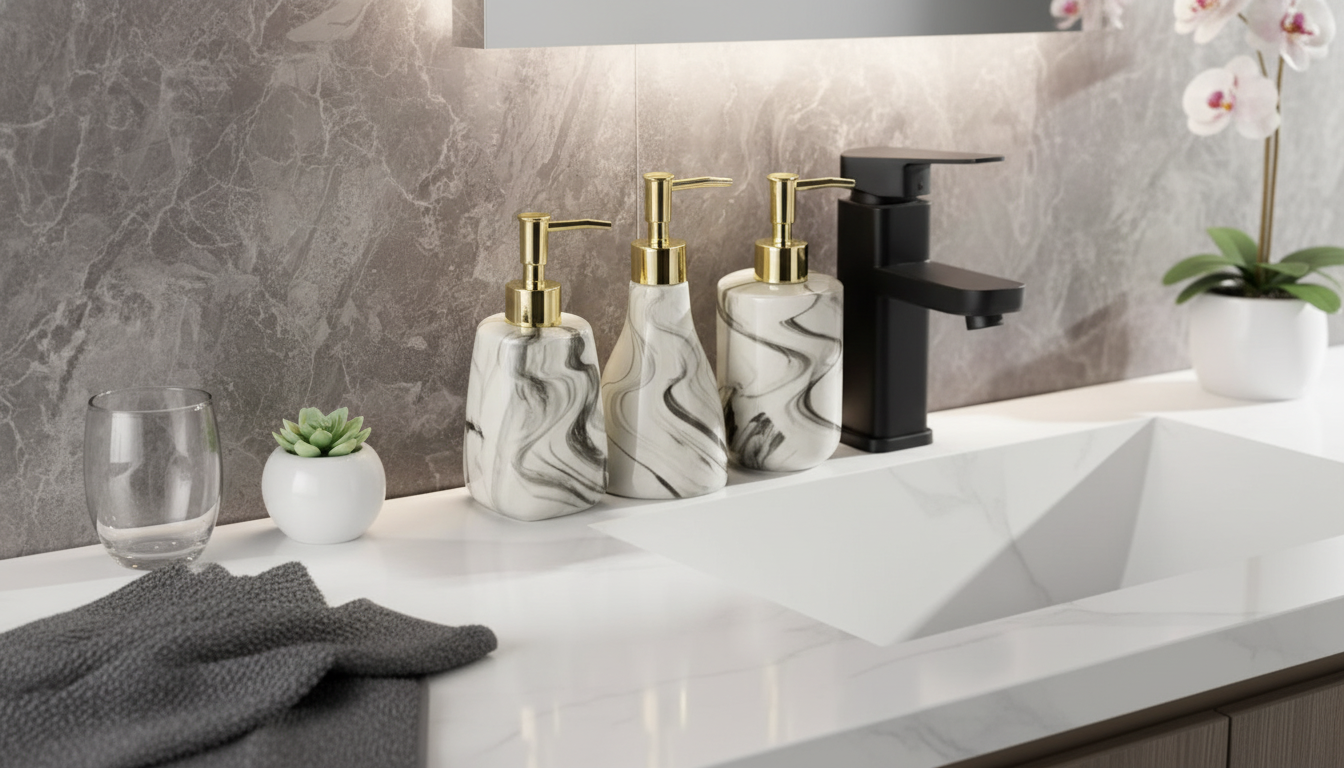
A ceramic dispenser with a refined gold pump brings a cleaner countertop, fewer plastic bottles, and a more coordinated look to bathrooms and vanities. With one refillable container, everyday handwashing and moisturizing feel more intentional—without adding clutter. Below is a practical guide to what to look for, where it works best, simple styling ideas, and easy care steps that help the pump stay smooth for daily soap or lotion use.
Ceramic has a natural “visual weight” that reads as decor instead of a temporary bottle you’ll replace next week. The glazed finish looks polished on a sink ledge, a vanity tray, or a shelf, and it tends to blend easily with tile, stone, and composite countertops.
The gold-tone pump is more than a functional top—it creates contrast against light surfaces (white quartz, cream tile, pale marble) and adds warmth beside neutral palettes. Even in minimalist bathrooms, that small metallic detail can make the whole sink area feel styled.
Refillability is the other big upgrade. Instead of a lineup of mismatched plastic labels, one dispenser keeps the surface calmer and easier to wipe down. And because the footprint is portable, it’s simple to move where it’s needed most—primary bath, guest bath, kitchen sink, laundry room, or even a bedside table for hand cream.
This style of dispenser is typically suited for liquid hand soap, dish soap, or pump-friendly lotion (depending on thickness). A ceramic body helps keep the base steady during pumping, and a gold pump pairs naturally with brass or gold fixtures for a coordinated look.
| Feature | What it means for daily use |
|---|---|
| Ceramic body | Stable on the counter and visually cohesive with other bathroom accessories |
| Gold pump | A decorative accent that coordinates with warm metal fixtures |
| Refillable container | Less waste and fewer disposable bottles on display |
| Portable footprint | Easy to move to guest bath, kitchen sink, or vanity area |
Use a ceramic dispenser as the anchor piece on a tray with a tumbler and a small item (like a candle or lidded jar). It helps the daily essentials look like a coordinated set rather than a collection of random objects.
One elegant dispenser can make a small powder room feel finished with minimal effort. Keep the rest simple: a clean hand towel and a small catch-all dish for rings.
Fill it with dish soap for a more streamlined kitchen counter. Consider placing it on a small saucer or tray if the sink area tends to stay wet—this helps keep the base clean and reduces water spotting on the counter.
A dedicated dispenser for hand soap or a stain-pre-treat soap can make the laundry counter feel more organized. It’s a subtle upgrade that keeps utility spaces from feeling neglected.
For a quick “pulled-together” look, build a small sink vignette: place the dispenser on a tray with a folded hand towel and one small decorative item. This approach also creates a defined zone for soap, which makes cleaning faster—just lift the tray and wipe underneath.
Gold accents look especially good with warm neutrals like cream, sand, and taupe. For a bolder feel, pair a gold pump with charcoal, navy, or deep green for higher contrast. If your fixtures are chrome or matte black, a gold pump can still work as a single statement—just repeat the warmth somewhere nearby, such as a brass-toned container or a warm wood element.
If you like the idea of a matched set without an overly “decorated” counter, consider using one dispenser for soap and a second (matching or complementary) container for lotion. The goal is to keep labels and brand packaging out of sight so the sink area reads as calm and consistent.
Good handwashing habits matter, too—keeping soap accessible and pleasant to use encourages consistency. For additional guidance on effective handwashing, the CDC’s Clean Hands Save Lives resource is a helpful reference.
Refilling also supports a more reuse-focused routine. If you’re aiming to cut down on single-use plastics and packaging, the EPA’s guidance on reducing and reusing offers practical ideas that pair well with refillable home accessories.
Yes—liquid soap is typically easiest; lotion can work if it’s not overly thick. Rinse and clean the pump when switching products to help prevent residue buildup.
Wipe it with a soft, damp cloth and dry immediately. Avoid abrasive cleaners; if residue builds up, wash gently with warm water and mild dish soap, then dry.
Remove the pump, flush warm water through the pump head and tube, then reassemble and prime. If you’re using a thicker product, plan on cleaning the pump more often.







Leave a comment