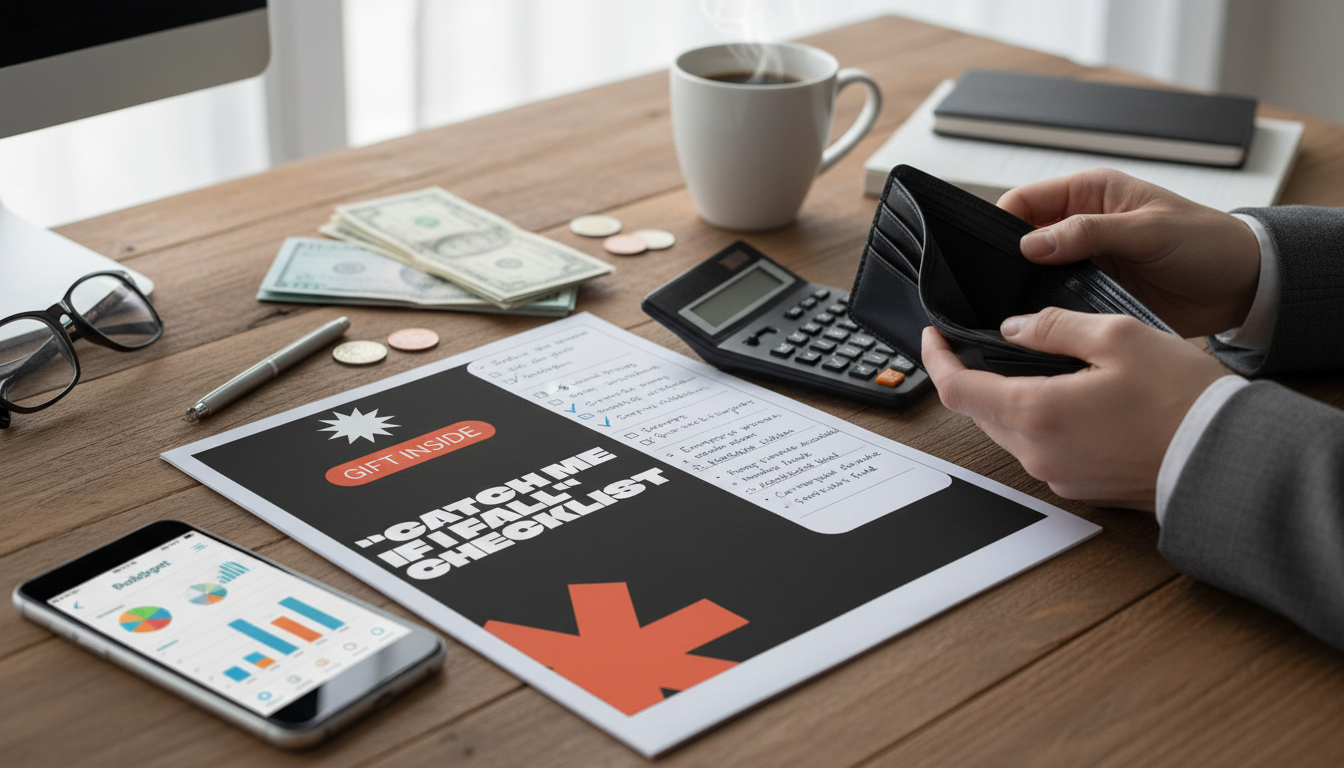
A solid financial safety net is more than a savings number—it’s a plan for what happens when life gets expensive fast. The “Catch Me If I Fall” Checklist is a downloadable emergency fund planner and money management checklist designed to help prioritize essentials, map out realistic savings targets, and reduce the panic that comes with unexpected bills. Use it to turn “someday” preparation into a clear, repeatable routine.
An emergency fund works best when it’s tied to real costs, not vague goals. Start by separating “survival expenses” from everything else so you know what must be protected first.
For broader guidance on getting started, the Consumer Financial Protection Bureau has a practical overview of emergency savings basics: Consumer Financial Protection Bureau — Building an emergency fund.
Most people don’t struggle with the idea of saving—they struggle with consistency when life is busy. A checklist is less about willpower and more about reducing friction.
Think of this as a low-drama routine that keeps your safety net alive even during unpredictable months.
| Task | What to check | Decision to make |
|---|---|---|
| Bills scan | Due dates in the next 14 days | Move money to cover essentials first |
| Fund progress | Current balance vs. mini-goal | Choose a small top-up amount |
| Risk scan | Car/health/home items that look urgent | Add one note to the next month plan |
| Spending reality check | One category that crept up | Pick one easy cut for the week |
| Next action | A single step you can do today | Schedule it (date/time) |
Targets stick when they’re based on your essentials and your risk level—not on someone else’s number. A good structure is: start small, stabilize one month, then expand.
If your baseline essentials total $2,200/month, the first meaningful milestone might be $500 (momentum), then $1,000 (breathing room), then $2,200 (one month), then $4,400–$6,600 (two to three months) if your household depends on one income or your work is unpredictable.
If you want the structure ready-made, The “Catch Me If I Fall” Checklist (digital download) is designed to be quick to start and easy to reuse.
To support that calmer rhythm, consider adding the Calm With Smart Tools Guide for gentle, practical stress-relief routines, or refine your environment with Mastering Furniture Arrangement for Calm and Clarity to make everyday spaces feel more supportive when life gets demanding.
For an additional preparedness perspective that includes records, contacts, and planning, FEMA’s overview is a helpful reference: FEMA — Financial preparedness.
A strong starter goal is one you can hit quickly—often $100 to $500—so the habit becomes real. From there, aim for one month of essential expenses, then expand based on income stability and responsibilities.
Yes, separation helps reduce “accidental spending” while keeping the money available when it matters. A dedicated, insured savings account can balance access and temptation, especially if you choose transfer timing that fits your risk level.
A true emergency is necessary, urgent, and unexpected (or an income gap) tied to essentials—like medical care, critical repairs, or keeping housing and utilities current. Planned purchases, upgrades, and non-urgent wants usually don’t qualify.







Leave a comment