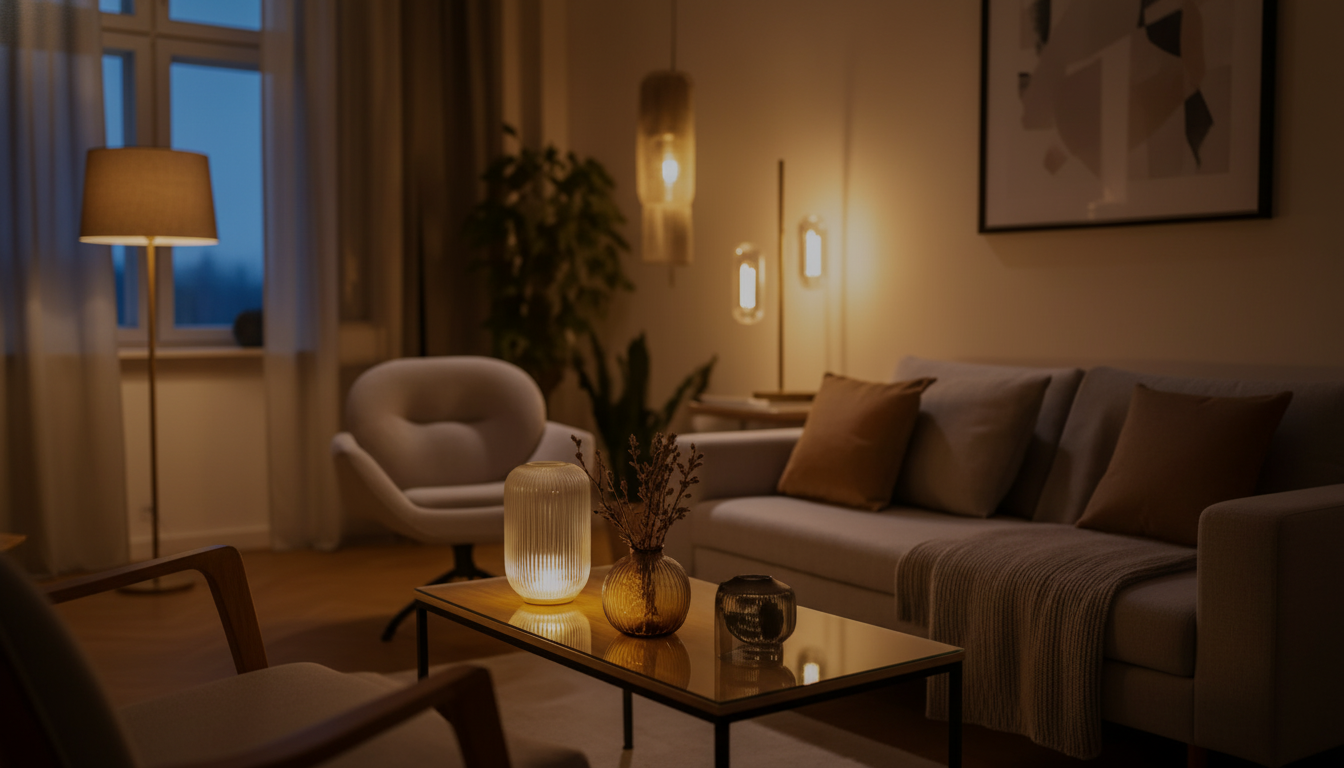
Lighting is more than visibility—it shapes comfort, focus, intimacy, and energy. Mood comes from how bright the room is, where the light lands, how warm or cool it feels, and how much contrast you create between “background” and “feature” areas. With a few intentional choices—layered light, glare control, and simple styling—almost any room can feel calmer, more inviting, or more energized without a full remodel.
For a deeper, step-by-step framework with examples and styling recipes, Mood by Design: Mastering Lighting to Transform Any Space lays out a practical system that works for homeowners and professionals alike.
Mood shifts quickly when the light level changes. Lower ambient light generally reads calmer and more intimate; higher levels support activity, alertness, and “get it done” energy. The trick is avoiding a single, uniform brightness everywhere—great spaces feel composed because light has priorities.
Direction is the next lever. Uplight softens edges by bouncing illumination off the ceiling. Downlight sharpens and defines, which is helpful for tasks but can feel harsh if it’s the only source. Side light adds depth because it reveals texture (think: curtains, wall paint, plants). Backlight creates silhouettes and a subtle sense of drama, especially behind headboards, shelves, or artwork.
Color temperature sets the emotional baseline. Warmer light tends to feel restful and flattering in the evening; cooler light can feel crisp and task-forward. Because the eye adapts, consistency matters: a very cool hallway next to a warm living room can feel jarring at night.
Contrast is what makes lighting feel “designed.” A bright focal point (reading chair, art, dining table) against a softer background guides attention and makes the room feel intentional even with simple fixtures. Glare is the fastest mood-breaker; reducing it often improves comfort more than adding more lumens. For deeper technical standards and guidance, resources like the Illuminating Engineering Society (IES) and the U.S. Department of Energy LED lighting guide are helpful references.
| Goal | Ambient level | Color temperature | Best light directions | Go-to fixture types |
|---|---|---|---|---|
| Relax and unwind | Low to medium | Warm | Uplight + shaded side light | Table lamps, floor lamps, wall sconces |
| Focus and productivity | Medium to high | Neutral to cool | Downlight + task beam | Desk lamp, under-cabinet strips, recessed task zones |
| Entertain and socialize | Medium | Warm to neutral | Layered with focal accents | Dimmable pendants, lamps, picture lights |
| Drama and depth | Low ambient with strong accents | Warm to neutral | Grazing + backlight | Spotlights, wall washers, LED strips behind features |
| Clean and refreshed | Medium to high | Neutral | Even ambient + vanity/task | Ceiling fixture + vertical face lighting |
Start with three layers. Ambient is your overall “base.” Task covers work zones like a desk, vanity, or kitchen counters. Accent is what adds depth—art lights, shelf lighting, or a directional lamp that highlights a plant or textured wall.
Add at least one soft source per room (a shade, diffuser, or bounced uplight). Soft sources lower visual tension and make the entire space feel more forgiving, especially at night. Where mood matters most—living rooms, bedrooms, dining, and bathrooms—dimming is the fastest upgrade because it lets one setup work for multiple moments.
Controls are part of design. Separate ambient and accent circuits (or at least separate plug-in lamps from overhead lighting) so the room can shift from bright and functional to low and cozy without changing a single fixture. Tune last: once lights are in place, adjust bulb color temperature and brightness based on wall color, textiles, and when the room is used most.
Prioritize layered lamps and accents over a single bright overhead. Create one primary reading zone (a floor lamp or table lamp aimed at a chair) and two softer zones (a shaded lamp near the sofa and an accent aimed at art or a plant). Keep the background slightly dimmer than the focal points for that “settle in” feeling.
If you want a repeatable, mood-led approach—calm, energized, intimate, clean, dramatic—Mood by Design: Mastering Lighting to Transform Any Space provides a practical framework for selecting and placing lights, plus styling guidance so rooms look cohesive day and night.
Lighting and layout work best together. When furniture placement supports clear pathways and purpose-driven zones, your lighting plan becomes simpler and more effective. Mastering Furniture Arrangement for Calm and Clarity helps translate the “where do things go?” question into a plan that supports comfort and flow.
For a broader home-wellness angle—building calmer routines and environments—Calm With Smart Tools — AI-Enhanced Stress Relief Ebook for Home Wellness, Mindfulness & Relaxation complements mood-focused lighting with practical strategies for everyday decompression.
Warm white light (often in the 2700K–3000K range) typically feels cozier for living rooms and bedrooms, while neutral light works well for kitchens and bathrooms. The most important factor is consistency within the room so adjacent fixtures don’t clash at night.
A practical minimum is usually three points of light: one ambient source, one task light, and one accent light. Larger rooms often need more than three, but layering plus dimming will matter more than chasing a specific number.
Lamps can handle both mood and everyday function in many spaces, especially living rooms and bedrooms, as long as there’s adequate task light where needed. Overhead lighting can still be useful for general visibility, but it works best when it’s on a separate control and can be dimmed to avoid glare.



Leave a comment