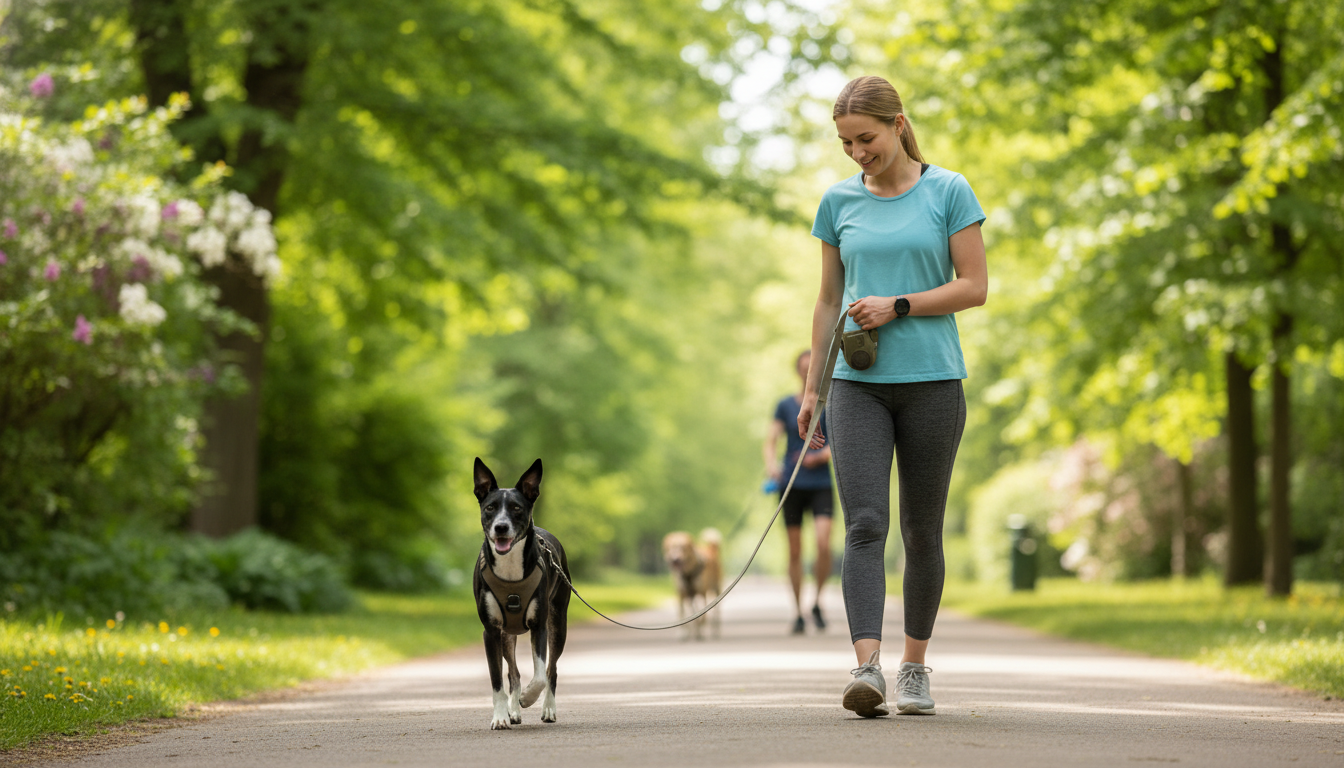
Loose leash walking is less about a “perfect heel” and more about building a walking partnership: a leash that stays slack most of the time, a dog that can focus, and a handler with a simple plan for what to do when pulling starts. With a few setup tweaks, consistent rewards, and short skill-building sessions, calm walks become a repeatable routine for puppies and adult dogs alike.
The goal is a mostly slack leash with your dog walking near your side, able to sniff when invited and reorient when asked. That’s different from formal heeling, where the dog holds a precise position the entire time. Loose leash walking allows natural movement and decompression—within boundaries you can maintain.
Good signs you’re improving include fewer leash “pops,” fewer sudden lunges, quicker check-ins, and easier recovery after distractions (a passing dog, a jogger, a squirrel). A realistic timeline is measured in weeks of practice, not one magical “fixed” walk—especially for young puppies and adolescent dogs with busy brains and fast feet.
Training goes faster when the physical setup makes the right choice easy. Choose humane, comfortable equipment: a well-fitted Y-front harness or a flat collar. Avoid tools designed to create pain or fear to suppress behavior. Reward-based methods are widely supported by major welfare organizations, including the American Veterinary Society of Animal Behavior (AVSAB).
Use a standard 4–6 foot leash for training. Retractable leashes tend to keep constant tension on the line, which makes “slack leash” harder for your dog to understand. Stock up on pea-sized soft treats that are easy to deliver quickly, and start in low-distraction locations (a hallway, driveway, or quiet sidewalk). Keep early sessions short and separate from longer exercise outings; skill practice is easiest when your dog is not over-aroused or already exhausted.
| Item | Best choice for training | Why it helps |
|---|---|---|
| Leash | 4–6 ft standard leash | Makes slack and tension clear; easier to handle turns and resets |
| Harness/collar | Y-front harness or flat collar (proper fit) | Comfort and freedom of movement; reduces conflict |
| Rewards | Soft, high-value treats + occasional sniff breaks | Builds motivation; reinforces calm choices |
| Starting location | Low-distraction area | Increases success rate and learning speed |
| Session length | 5–10 minutes | Prevents frustration and keeps focus high |
Loose leash walking becomes much simpler when your dog frequently checks in. Start by conditioning a reward marker (a consistent word like “Yes”). The marker tells your dog the exact behavior that earned the reward, which speeds up learning.
Next, teach an easy check-in: in a quiet space, reward any glance toward you. Over time, shape toward slightly longer eye contact when appropriate (you don’t need a stare-down; you’re building a quick “Are we still connected?” habit).
For additional guidance, the American Kennel Club’s loose leash walking overview aligns well with these foundation skills.
If you want a simple framework you can print and reuse, see Teaching Your Dog Loose Leash Walking | Dog Training Guide for Calm Walks (Digital Download).
For handlers who want extra support staying calm and consistent during training weeks, Calm With Smart Tools — AI-Enhanced Stress Relief Ebook for Home Wellness, Mindfulness & Relaxation can pair well with a routine built around short sessions and realistic expectations.
Most dogs show noticeable improvement in a few weeks with short, consistent practice, but reliable loose leash walking around distractions can take a few months. Age, past pulling habits, the training environment, and how consistent the household is all affect the timeline.
Yes—sniffing is valuable enrichment and can reduce frustration. Put it on cue (like “Go sniff”) and treat it as a reward for returning to you and keeping the leash slack.
Lower the difficulty by practicing indoors, in your driveway, or on a quiet sidewalk, and use higher-value treats with very short sessions. Use one consistent reset (stop-and-wait or a calm 180° turn), and consider a certified trainer if you’re feeling stuck or your puppy is becoming reactive.




Leave a comment