Litter box odor usually comes from two places: waste sitting too long and residue that clings to the box itself. Stainless steel helps by resisting scratches, stains, and odor absorption, making routine scooping and full cleanouts faster and more effective. This guide breaks down what makes a stainless steel box different, how to set it up for better odor control, and what to look for if switching from plastic. For more guidance, see Best Cat Litter Boxes – Consumer Reports.
Why stainless steel stays fresher than plastic
Stainless steel litter boxes tend to “hold onto” fewer smells over time because the material doesn’t behave like aging plastic. For further reading, see XL Stainless Steel Litter Box with Lid, Fully Enclosed 6″ Deep Metal ….
- Non-porous surface: Odor molecules and moisture are less likely to soak in, so lingering smells build up more slowly.
- Scratch resistance matters: Deep scratches in plastic can trap urine residue and bacteria, which can smell even after washing.
- Quicker rinse-and-dry: Stainless usually rinses clean faster and dries without that “film” that can cling to older boxes—helpful when cleaning in smaller spaces.
- Litter compatibility: Works well with most litter types, including clumping clay and many low-dust options.
Odor control basics that matter more than the box material
Even the best pan can’t out-perform inconsistent upkeep. These habits usually make the biggest difference in day-to-day odor.
- Scooping frequency: Remove clumps daily (or twice daily in multi-cat homes) to reduce ammonia buildup.
- Litter depth: Keep a consistent layer—often 2–3 inches for clumping litter—to support firm clumps and reduce wet spots sticking to the bottom.
- Ventilation: Place the box where air can circulate; avoid sealing it inside an unventilated cabinet.
- Right number of boxes: Common guidance is one box per cat plus one extra to reduce crowding and accidents.
- Diet and hydration: Urine concentration can influence smell; persistent strong odor can be worth a vet check. General cat care guidance is available from the American Veterinary Medical Association (AVMA).
Also keep hygiene in mind when handling litter. The CDC’s toxoplasmosis prevention guidance is a solid reference for safe cleanup routines, especially for households with higher-risk individuals.
What to look for in an odor-free stainless steel litter box
Not all stainless steel pans are built the same. These features support cleaner use and faster wash-downs.
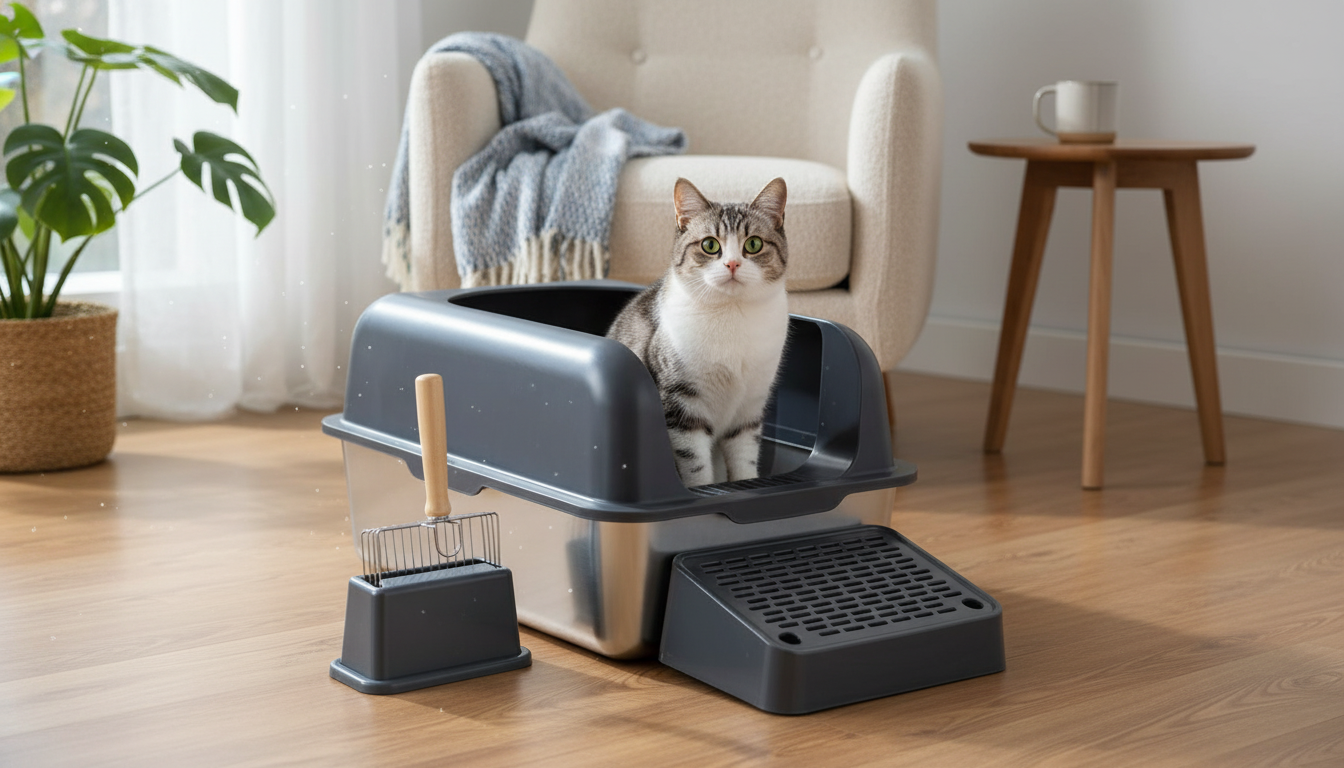
- High sides or a splash guard: Helps reduce urine spray and kicked litter—especially helpful for “standing” urinators.
- Smooth, rolled edges: Safer to carry during cleanouts and less likely to snag a liner (if used).
- Stable base and weight: Reduces sliding on tile and helps keep litter level even.
- Size fit: Cats should be able to turn around comfortably; larger cats often do best with a roomy pan.
- Finish and seams: A smooth interior with minimal seams is easiest to wipe down thoroughly.
Stainless steel vs plastic: practical tradeoffs
Stainless steel usually wins on long-term freshness and durability, but there are real-day-to-day differences worth considering.
Stainless steel and plastic litter boxes compared
| Feature |
Stainless steel |
Plastic |
| Odor absorption over time |
Low (non-porous) |
Higher (porous, especially when scratched) |
| Scratch and stain resistance |
High |
Medium to low |
| Deep cleaning effort |
Usually easier to fully rinse and wipe |
Often needs more scrubbing as it ages |
| Noise during scooping |
Can be louder |
Usually quieter |
| Typical lifespan |
Often long-term with proper care |
Often replaced more frequently |
- Cost: Stainless steel typically costs more upfront but can last longer if cared for.
- Noise: Metal can sound louder when scooping; a rubber mat underneath can dampen vibration.
- Cat comfort: Cats typically care most about box size, cleanliness, and litter type. If a cat has a history of avoidance, keep the layout and litter consistent while changing only the box material.
Setup that reduces smell in apartments and small homes
Small-space odor control is about preventing “satellite smells” (tracked litter dust, tiny splashes, and lingering humidity) from building up around the box.
If you’re rearranging a small room to create a more ventilated, lower-traffic litter zone, the Mastering Furniture Arrangement for Calm and Clarity guide can help you think through practical placement and flow without boxing the litter area into a dead-air corner.
Cleaning routine for stainless steel (quick daily + weekly reset)
Product options for a cleaner-smelling home
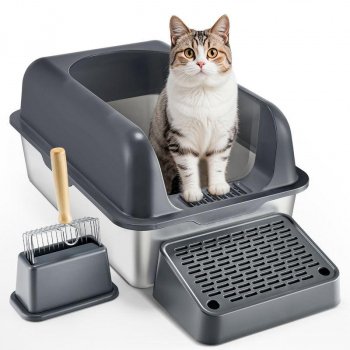
- Odor-Free Stainless Steel Cat Litter Box — designed to support a cleaner, lower-odor routine with easy-to-clean stainless steel surfaces. Best results come from pairing it with daily scooping, the right litter depth, and a reliable full-clean schedule.
- Calm With Smart Tools Guide — a practical add-on for building simple, repeatable home routines (including cleaning checklists) that are easier to maintain week after week.
FAQ
Does stainless steel actually reduce litter box odor?
It won’t eliminate waste odor by itself, but stainless steel resists absorbing smells and is less likely to trap residue in scratches. That makes regular cleaning more effective and helps odor buildup happen more slowly than with aging plastic.
Is a stainless steel litter box safe and comfortable for cats?
Yes, as long as the box has smooth or rolled edges for safe handling. Most cats care more about a roomy box, clean litter, and a familiar litter type; adding a mat can also improve stability and reduce scooping noise.
How often should a stainless steel litter box be washed?
Scoop daily, then do a full empty-and-wash about weekly for one cat (more often for multiple cats). Dry it completely before refilling to prevent odors and reduce litter sticking.
Recommended for you




Leave a comment