Cat spraying is stressful, but it’s often a solvable message about stress, territory, health, or routines. This guide focuses on practical, natural steps that support calmer behavior, cleaner homes, and better litter box habits—plus a printable checklist to track progress and stay consistent.
Before changing anything at home, it helps to identify what you’re seeing. Spraying is typically small amounts of urine deposited on vertical surfaces (often with a tail quiver) and is commonly linked to communication, stress, or territorial concerns. Inappropriate urination is usually a larger puddle on a horizontal surface and more often points to medical issues, litter box aversion, or access problems.
| Clue | More like spraying | More like inappropriate urination |
|---|---|---|
| Surface | Vertical (walls, door frames, furniture sides) | Horizontal (floors, beds, laundry) |
| Amount | Small spurts/marks | Larger puddles |
| Posture | Standing, tail up/quiver | Squatting |
| Common drivers | Stress, territory, social conflict | Medical issues, box discomfort, access |
Schedule a veterinary visit if spraying begins suddenly, increases rapidly, or is paired with straining, frequent trips, blood, crying, or appetite changes. Urinary tract disease, pain, constipation, and cognitive changes can all contribute to changes in elimination behavior. Ask your vet about urine testing and pain assessment, and follow the treatment plan before relying on behavior-only interventions.
For a deeper overview of health-related causes, see Cornell Feline Health Center — Inappropriate Urination.
Spraying is often about a cat trying to feel safer or more in control of their space. Common triggers include:
Helpful behavior context and prevention ideas are also summarized by International Cat Care — Spraying.
A no-spray plan works best when it lowers competition and boosts predictability. Start with the basics, then fine-tune based on what your cat is “telling” you with their patterns.
| Resource | Baseline target | Placement tip |
|---|---|---|
| Litter boxes | Cats + 1 | In separate areas; avoid tight dead-ends |
| Feeding stations | At least 1 per cat | Spread out to prevent guarding |
| Water | Multiple bowls/fountains | Away from litter; add to quiet zones |
| Resting spots | Several per cat | Mix of high, low, and hidden |
| Scratching | At least 1–2 per cat | Near sleep zones and traffic areas |
If any odor remains (even faintly), many cats interpret that spot as an approved “message board.” Use an enzymatic cleaner made for pet urine and follow label directions for soaking/contact time and reapplication. Avoid ammonia-based cleaners, which can smell urine-like and encourage re-marking.
After a thorough clean and full drying, temporarily change the meaning of the area: place a food station, bed, scratching post, or a short daily play session there. While habits reset, use washable covers or protective barriers to keep cleanup easy and to prevent quick “relapses” from becoming a pattern.
When spraying is linked to tension, the goal is to remove pressure points and give each cat a way to move, rest, and access resources without being cornered.
For professional guidance frameworks, see American Association of Feline Practitioners — Behavior Resources.
| Task | Frequency | Done (Y/N) | Notes |
|---|---|---|---|
| Scoop all litter boxes | Daily | Any box avoided? | |
| Interactive play (10–15 min) | Daily | Which toy worked best? | |
| Enzyme-clean any marked area | As needed | What was happening beforehand? | |
| Refresh water and add a second source | Weekly | Any guarding observed? | |
| Review home layout for bottlenecks | Weekly | Add perch or alternate route |
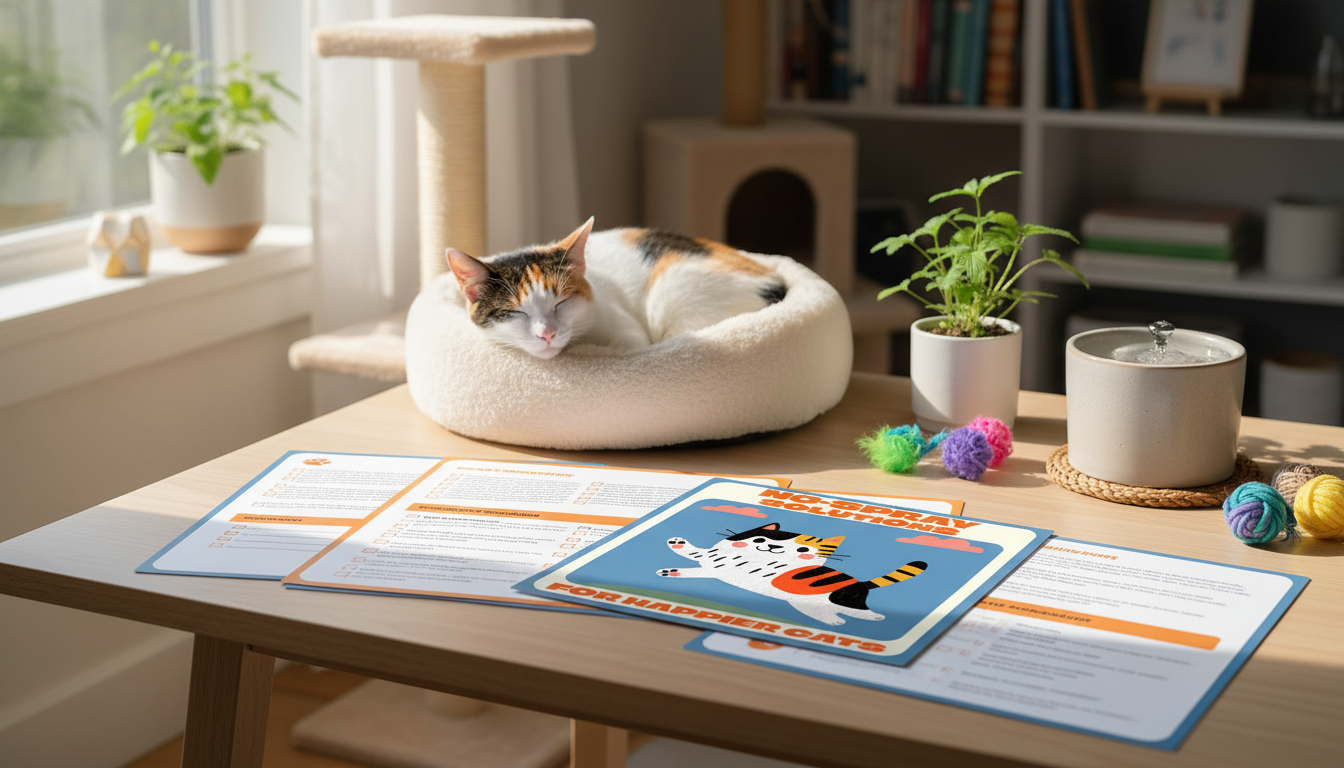
If you want a ready-to-use plan that’s easy to stick to, the No-Spray Solutions for Happier Cats printable checklist and guide includes practical home setup targets, cleaning reminders, and a simple tracking section to monitor progress over time.
It often reduces hormone-driven spraying, especially if done early, but stress, social conflict, and outdoor-cat triggers can still cause marking. The best results usually come from combining spay/neuter with resource setup, cleaning, and routine stability.
Use an enzymatic urine cleaner and follow the label directions for contact time and reapplication. Avoid ammonia-based cleaners, and don’t reopen access to the area until it’s fully dry and odor-free.
Some cats improve within days once triggers are reduced and old spots are cleaned correctly. If anxiety or multi-cat conflict is involved, it may take several weeks of consistent routines, better resource distribution, and careful management to see steady change.






Leave a comment