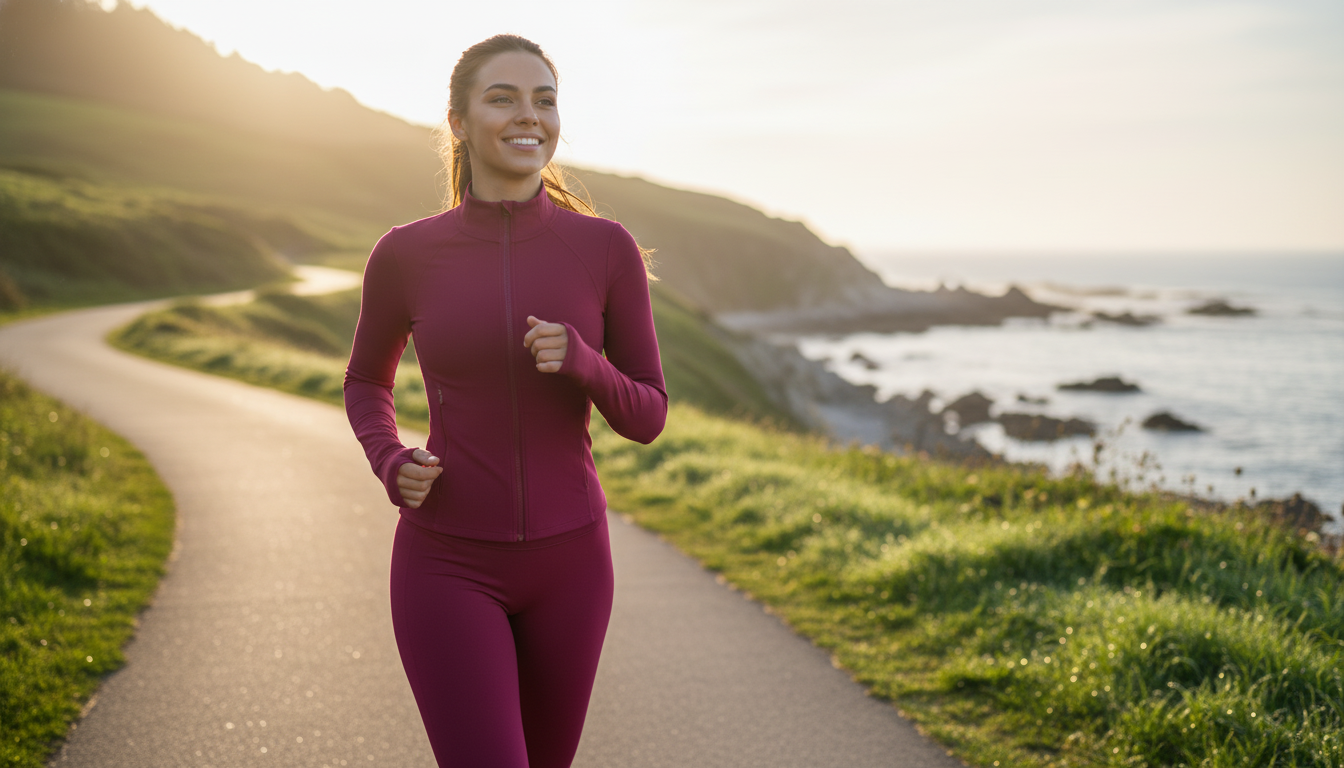
A lightweight performance jacket can make the difference between feeling comfortable and feeling distracted—especially when workouts shift from warm-up to high sweat, or from outdoor air to a heated studio. This long-sleeve quick-dry jacket is designed as an easy, breathable layer for yoga, running, and everyday movement, helping you stay covered without feeling weighed down.
On days when the pace changes—dynamic vinyasa, then a quick jog home—this kind of “middle layer” earns its place. It’s not meant to replace a true winter running jacket; it’s meant to be the layer you keep reaching for because it’s comfortable across a wide range of movement and temperature.
For yoga, comfort is often about what you don’t notice: sleeves that don’t slide down in downward dog, fabric that doesn’t cling heavily when you start to sweat, and a fit that stays composed through twists and forward folds. For running, it’s about consistent arm swing and freedom across the upper back—so the jacket doesn’t tug with each stride.
| Situation | Why it works | Suggested base layer |
|---|---|---|
| Morning run (mild temps) | Adds coverage while staying breathable | Sports bra + lightweight tank |
| Yoga class (start/end) | Helps avoid chills during rest and stretching | Seamless bra or fitted top |
| Gym warm-up + weights | Keeps muscles warm before intensity ramps up | Moisture-wicking tee |
| Errands after training | Quick-dry comfort and easy movement | Athleisure set or leggings + tee |
If you tend to get cold after sweating, a quick-dry layer can be especially helpful during cooldown and recovery. Guidance from trusted health and fitness organizations also emphasizes choosing workout apparel that supports comfort and safety during exercise—especially when heat, sweat, and changing conditions are part of the routine (see Mayo Clinic and the ACSM for general exercise and apparel considerations).
Breathable, quick-dry layers tend to feel most comfortable when they’re used as intended: as a flexible training piece that can be added or removed as effort changes. If you’re heading into wind or colder temperatures, pairing this kind of jacket with a light shell on top often feels better than wearing a single heavy layer that traps heat early and turns clammy later.
For recovery days and post-training routines, pairing movement-friendly apparel with a calming reset can support consistency. If you like guided relaxation and practical wellness prompts at home, consider Calm With Smart Tools — AI-Enhanced Stress Relief Ebook for Home Wellness, Mindfulness & Relaxation as a low-effort add-on to your wind-down routine.
Yes—quick-dry, moisture-managing fabric can feel comfortable in yoga because it stays lighter as you warm up, and it works well for running because it helps sweat evaporate faster during sustained cardio. A stretch-friendly, breathable build also supports overhead reaches, twists, and a natural arm swing.
It should allow easy shoulder and upper-back movement with no pulling across the chest, and sleeves should stay in place while your arms swing. Aim for enough room to wear a thin base layer underneath, then do a quick movement test (reach overhead, twist, and mimic a running stride) to confirm comfort.
Wash it soon after sweaty workouts, use a gentle cycle, and skip fabric softeners that can interfere with wicking performance. Air-drying and rotating layers can also help preserve stretch, shape, and the fabric’s moisture-management feel.






Leave a comment